EUROCENTRIC

22 · AD 1871–1945

The European Civil War

The armed peace formed after 1871 broke into a European civil war from 1914 to 1945, and Europe’s global significance carried that catastrophe across the earth.

Open the fault lines

Act I · The armed peace · AD 1871–1914

The Armed Peace

National power, political antisemitism, alliance systems, mass armies and railway plans accumulate beneath a surface of prosperity.

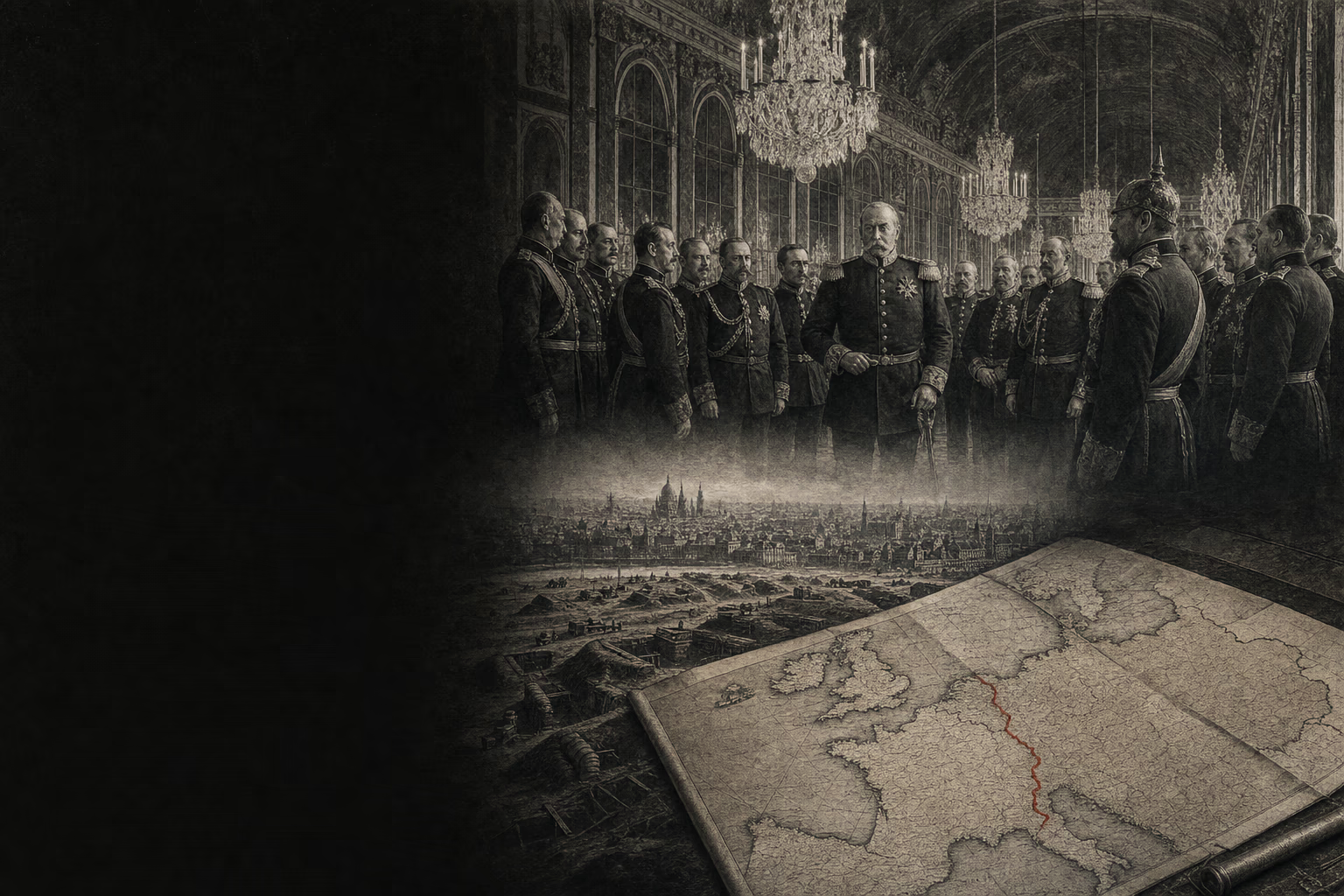
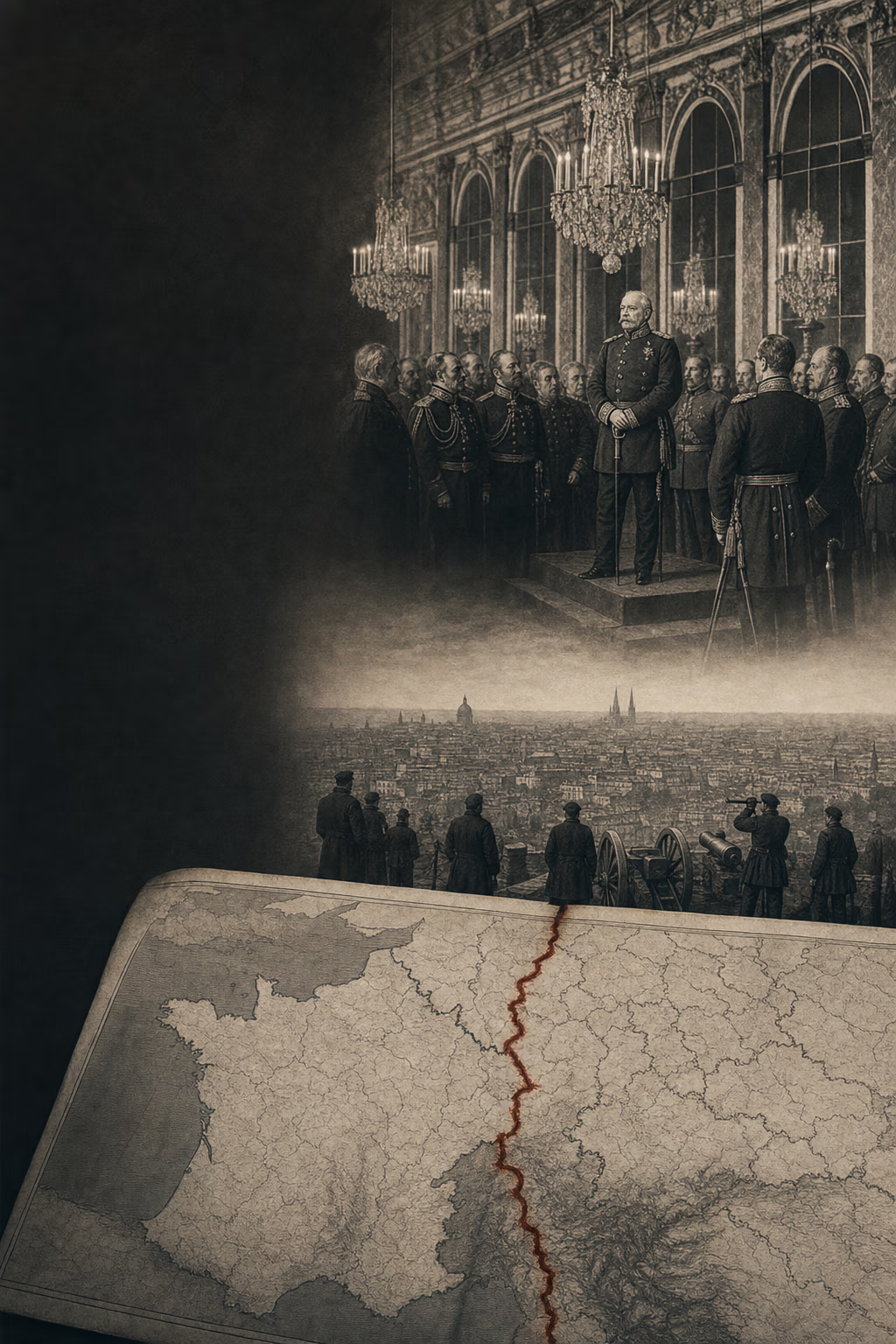
German princes gather around Wilhelm I in the Hall of Mirrors as a dated map marks the new empire and the annexed provinces of Alsace and Lorraine.Proclamation record, Versailles plan and 1871 boundary

AD 1871Versailles

An Empire Is Proclaimed in a Conquered Palace

German union shifted the balance of Europe while the place and terms of victory bound national achievement to a defeated neighbour’s humiliation.

On 18 January 1871, uniforms filled the Hall of Mirrors while Paris endured siege beyond the horizon. German princes acclaimed Wilhelm I of Prussia as German emperor beneath paintings of Louis XIV’s victories. The new Reich joined Prussia’s army, the North German constitution and the resources of the southern kingdoms in the centre of Europe. German national union was a formidable political achievement. Its proclamation inside a conquered French palace made the achievement inseparable from war in the memory of both states.

The settlement transferred Alsace and part of Lorraine to Germany and imposed a vast indemnity on France. Bismarck then worked to preserve the new order through alliances, restraint and the diplomatic isolation of France. The balance held for decades, though its centre had moved. France rebuilt its army and republic; Germany industrialised at extraordinary speed; Austria-Hungary and Russia faced national questions within multinational empires. Every great power governed citizens at home and imperial subjects abroad, carrying rival conceptions of nation, hierarchy and belonging inside the same European system.

Imperial expansion accustomed European governments to racial classification, rule by decree and bureaucratic command in territories denied equal citizenship. Political antisemitism recast Jewish citizens as a hidden nation whose legal equality could never be trusted. The techniques of imperial rule, national rivalry, mass politics and modern administration entered the next crisis as available instruments. A movement that joined them could build an order far more destructive than the conservative settlement of 1871.

What survived
  • The German Empire was proclaimed at Versailles on 18 January 1871 while Paris remained under siege during the Franco-Prussian War.
  • The Treaty of Frankfurt transferred Alsace and part of Lorraine to Germany and required France to pay an indemnity of five billion francs.

Christopher Clark (2006)Mark Mazower (1998)
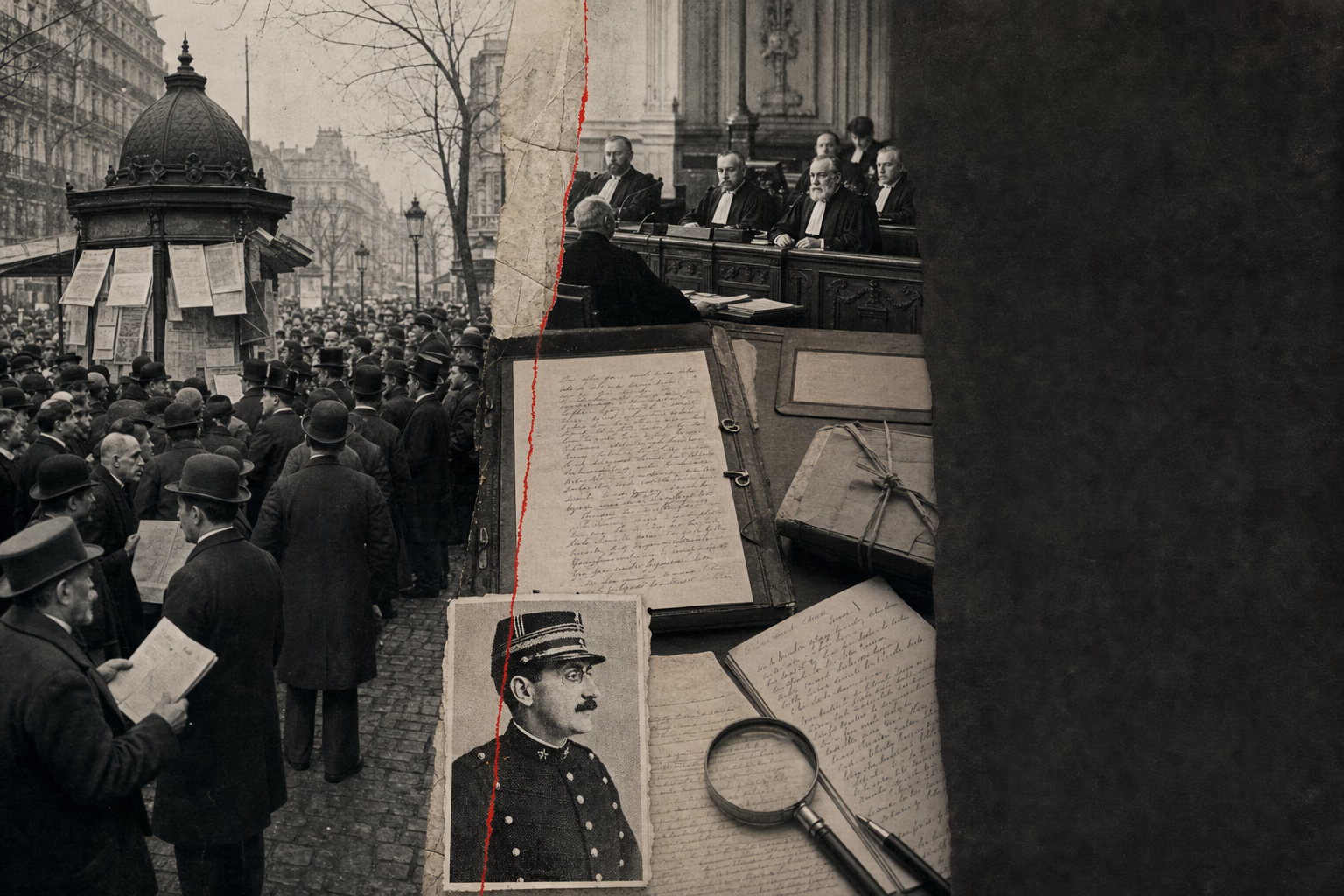
A divided Paris street places a newspaper kiosk, Dreyfus case papers and an Alfred Dreyfus portrait medallion opposite a court docket.Portrait medallion, newspaper record and court judgment

AD 1894–1906Paris and Rennes

The Dreyfus Case Divides the Street

The struggle over Alfred Dreyfus exposed political antisemitism as a modern organising force and tested whether republican citizenship belonged to law or blood.

A torn memorandum recovered from the German embassy brought suspicion onto Captain Alfred Dreyfus, one of the few Jewish officers on the French General Staff. In 1894 a military court convicted him of treason after receiving a secret dossier his defence could not examine. He was publicly degraded and sent to Devil’s Island. The proceedings gave an old hatred a modern institutional costume: expert testimony, military secrecy, mass newspapers and the authority of a republic all appeared to certify the fiction that a Jewish officer’s ancestry made betrayal plausible.

Evidence soon pointed to Major Ferdinand Walsin Esterhazy. Lieutenant Colonel Georges Picquart identified the new handwriting and found that the secret case against Dreyfus could not bear scrutiny. The army protected its verdict; Picquart was transferred and imprisoned; Esterhazy was acquitted. Émile Zola’s open letter, J’accuse…!, converted the concealed injustice into a national contest. Anti-Dreyfusard leagues treated Jews as an alien power lodged inside France, while Dreyfusards defended evidence, judicial review and the citizen’s standing before a common law.

The Court of Cassation annulled the judgment in 1906, and Dreyfus returned to the army. Legal institutions had repaired a wrong after twelve years, giving the republic a genuine victory. The mobilisation around the case left another fact in view. Antisemitism no longer lived only in inherited prejudice or religious exclusion. It could bind newspapers, veterans, street organisations, conspiracy theories and electoral ambition into a politics that declared one category of citizen permanently suspect. Law had vindicated equal citizenship; mass politics had learned to imagine belonging through exclusion.

What survived
  • Dreyfus was convicted in 1894 after a closed military proceeding that included a secret dossier withheld from the defence.
  • The Court of Cassation annulled the Rennes judgment in July 1906; Dreyfus was exonerated, reinstated and made a chevalier of the Legion of Honour.

Ruth Harris (2010)Hannah Arendt (1951/1958)

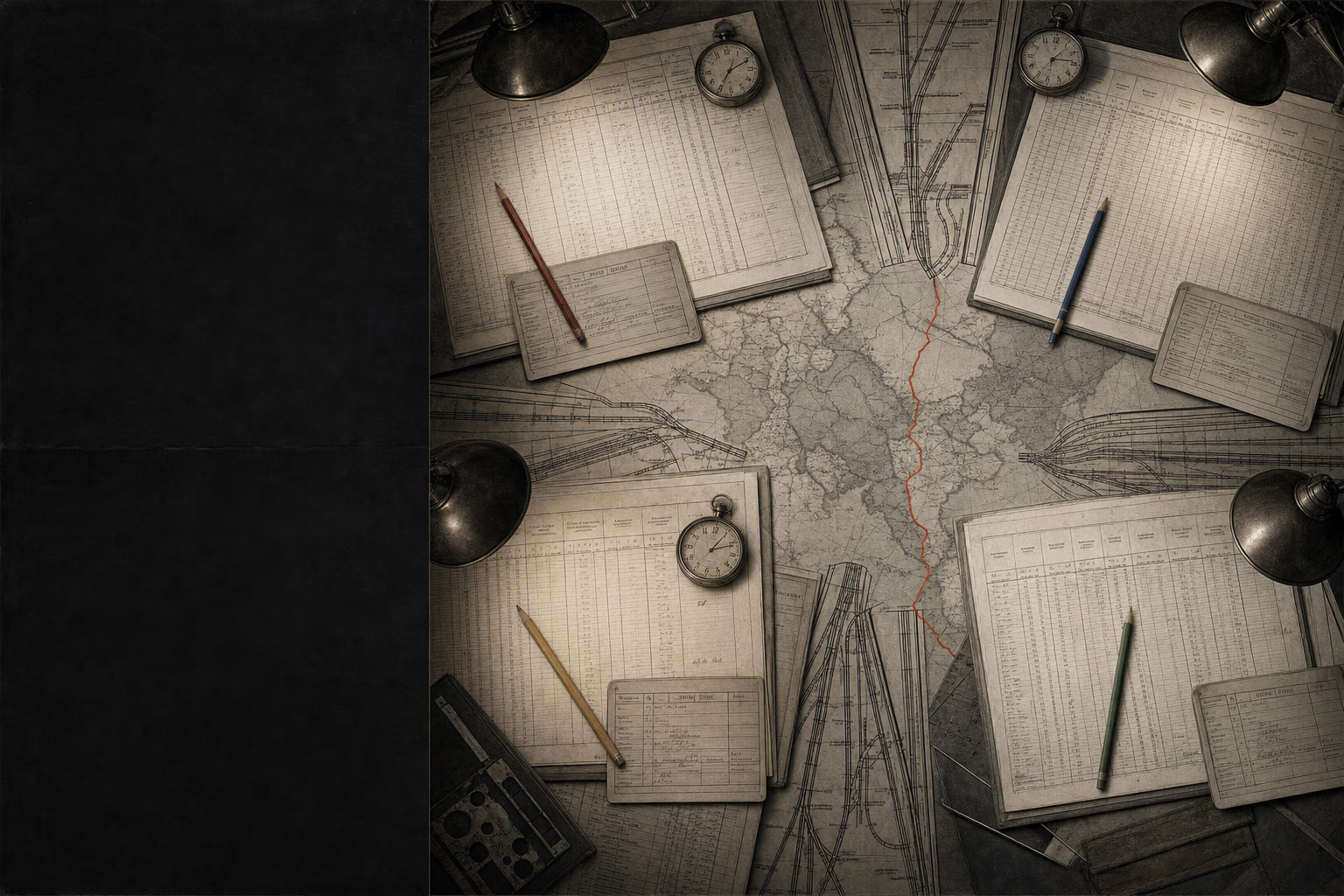
French, German, Austro-Hungarian and Russian mobilisation tables align over a railway diagram with alliance obligations kept visually separate from military assumptions.Mobilisation tables, railway diagrams and dated orders

AD 1890–1914Berlin, Paris, Vienna and St Petersburg

The Continent Is Written as a Schedule

Alliance commitments, conscription and railway planning joined separate fears into a military system whose speed compressed the time available for political choice.

In general-staff offices, Europe became columns of figures. Officers counted active corps, reserve formations, locomotives, sidings, horses, bridges and the days required to place an army at a frontier. Universal or near-universal male service gave continental states millions of trained reservists. Railways could gather them faster than any previous army, provided every train occupied its assigned line and minute. Civilian networks built to carry coal, food, letters and holiday crowds acquired a second existence in sealed plans.

Diplomacy gave those plans direction. The Triple Alliance joined Germany, Austria-Hungary and Italy under defined conditions; the Franco-Russian alliance promised action against a German-led attack; Britain’s understandings with France and Russia settled imperial disputes and created the Triple Entente without becoming one automatic military command. Naval rivalry, Balkan crises and the weakening of Ottoman authority sharpened the stakes. Staffs planned against danger because planning was their duty. Each finished schedule encouraged another staff to assume that delay would place its own country at a fatal disadvantage.

A timetable never declared war. Cabinets, monarchs, ministers and military leaders retained responsibility for every order they issued in 1914. The schedules changed the setting in which they chose. Once mobilisation began, thousands of interlocking movements were hard to pause or redirect; a plan aimed at one enemy could cross another state’s frontier; an ally’s delay could expose an entire flank. Europe had built immense administrative competence. In a crisis, that competence could narrow political time until decision appeared to mean activating the machine or watching an opponent activate first.

What survived
  • European general staffs prepared detailed mobilisation and concentration plans around railway capacity, reservist call-up and fixed sequencing.
  • The pre-war alliance blocs created expectations and commitments, while political leaders still made the decisions that converted crisis into war.

David Stevenson (1996)Hew Strachan (2001)

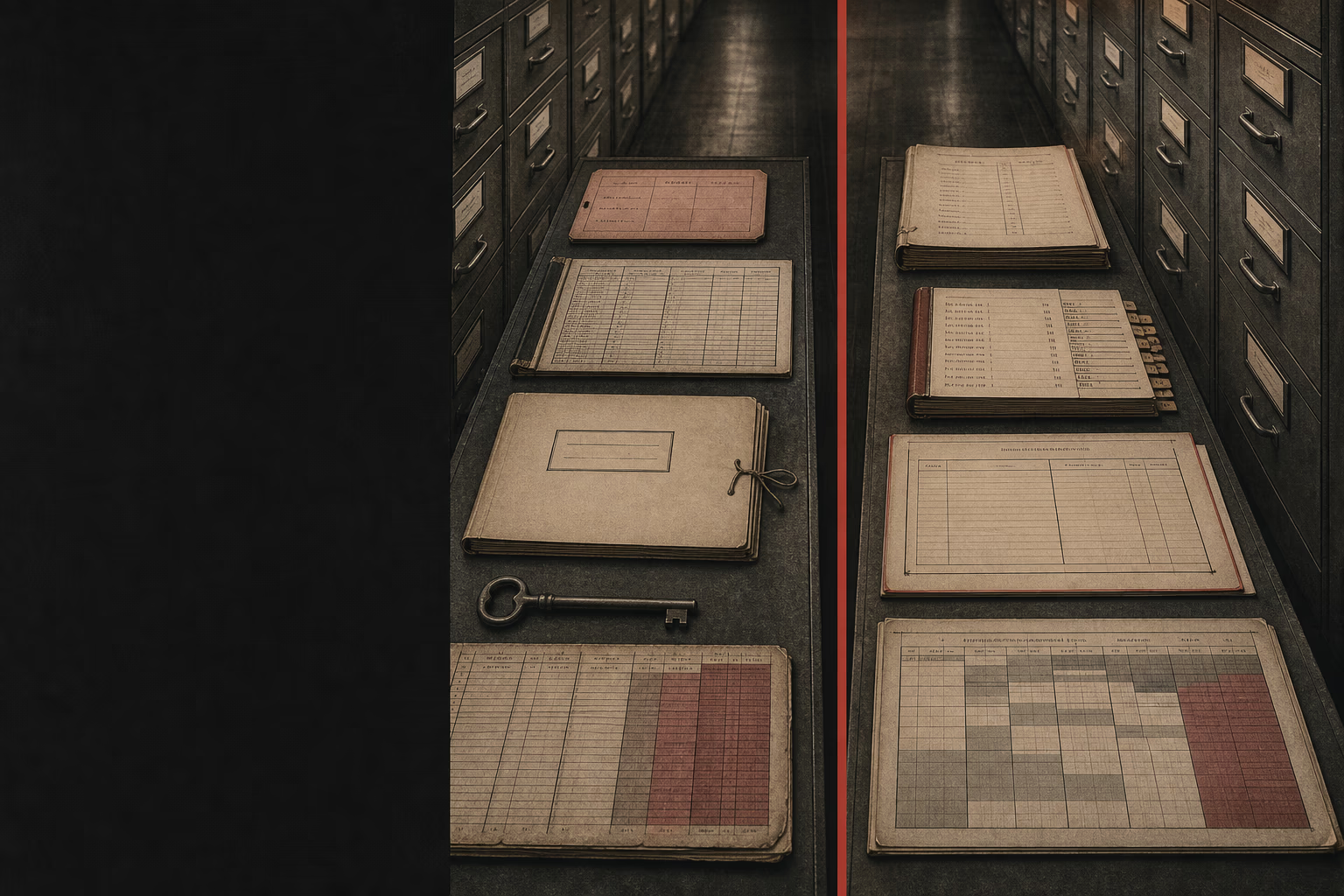
Mobilise by timetable

Four fixed records compare the strategic railway systems, mobilisation orders and opening movements of France and Germany, showing how prepared schedules compressed political time without causing the war.

Capacity becomes assumption

France
Concentrate armies toward the eastern frontier
Germany
Concentrate first against France, then turn east
Political fact
No railway plan has authority to declare war
The plans create powerful expectations about which hours may be lost.

Both staffs calculate how many formations their railways can place near a frontier and how quickly an opponent can do the same.

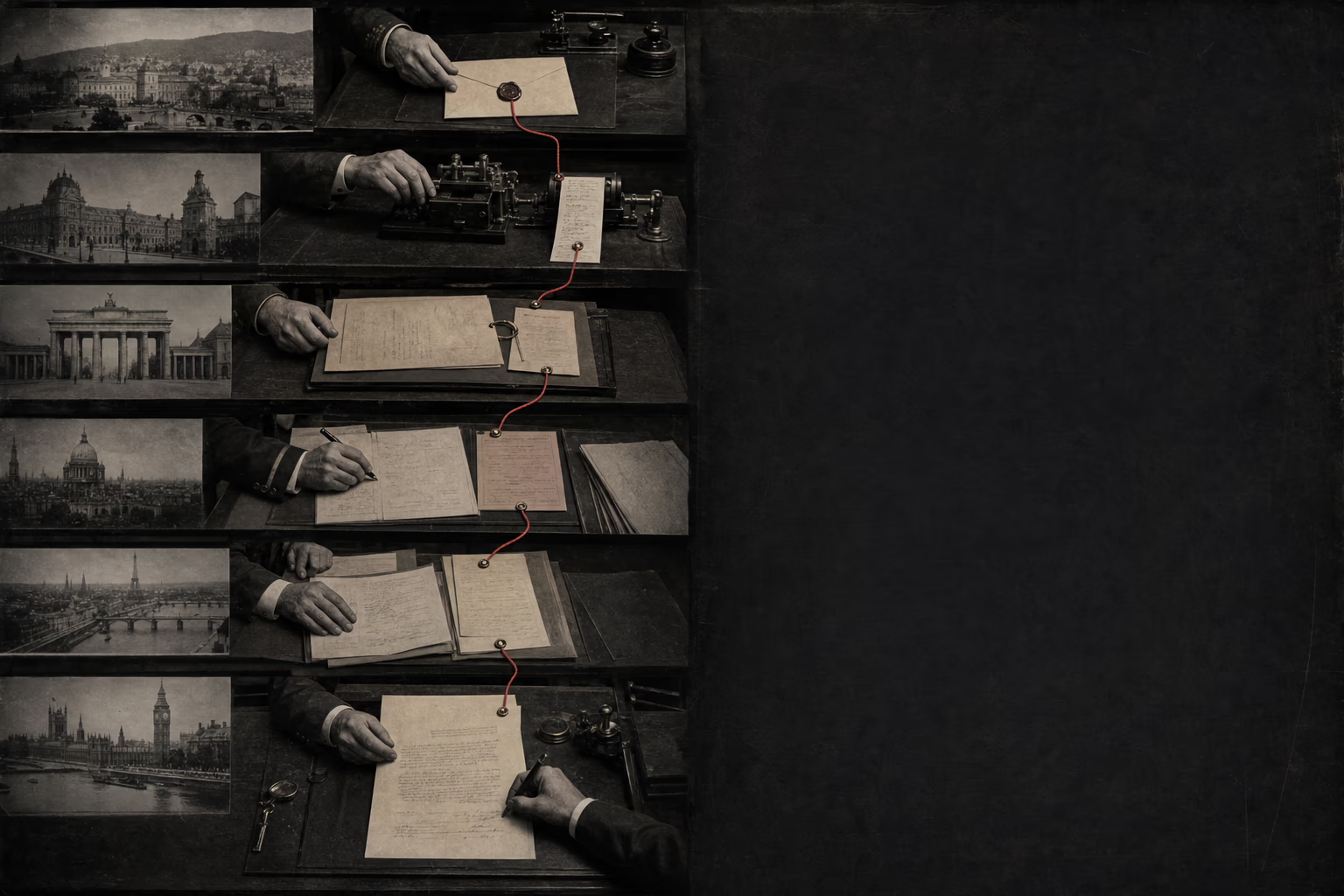
Six dated desks carry the Sarajevo report, German assurance, Austro-Hungarian ultimatum, Russian mobilisation order, French cabinet papers and British declaration in sequence.Telegram, ultimatum, cabinet record and mobilisation notice

28 June–4 August 1914Sarajevo, Vienna, Berlin, St Petersburg, Paris and London

Sarajevo Enters Vienna

Thirty-seven days of deliberate decisions turned a Balkan assassination into a continental war that Europe’s empires carried across the world.

On 28 June, Gavrilo Princip shot Archduke Franz Ferdinand and Sophie in Sarajevo. The murder emerged from the politics of Bosnia, Serbian nationalism and the clandestine networks that crossed the Habsburg frontier. Vienna chose to use the crime as an opportunity to break Serbian power. Germany offered Austria-Hungary firm support. The resulting ultimatum demanded concessions designed to penetrate Serbian sovereignty; Serbia accepted much and rejected the points that placed Austro-Hungarian officials inside its legal process. Austria-Hungary declared war on 28 July.

The crisis widened through choices made under fear and incomplete information. Russia moved to protect Serbia and its position in the Balkans, first through partial measures and then general mobilisation. Germany declared war on Russia and France. Its western plan required an advance through Luxembourg and neutral Belgium. Britain, divided until the final days, entered after the Belgian invasion joined treaty obligation, strategic interest and the danger of German control across the Channel. No invisible alliance mechanism pulled a lever. Governments judged the risks of restraint greater than the risks of force and issued the orders themselves.

The war became global because Europe was globally consequential. Britain and France drew soldiers, labour and resources from empires spanning Africa, Asia, the Caribbean and the Pacific; Germany possessed colonies and commercial networks; Russia’s empire reached the Caucasus and Central Asia; the Ottoman decision to join opened fronts across the Middle East; Japan entered against German positions in East Asia under its own strategic aims. The conflict’s European centre never made lives elsewhere secondary. Europe’s command of territory, shipping, finance and cable turned its internal struggle into a world war.

What survived
  • Austria-Hungary delivered its ultimatum to Serbia on 23 July, declared war on 28 July and began bombardment of Belgrade the next day.
  • Germany declared war on Russia on 1 August and France on 3 August; Britain declared war on Germany on 4 August after German forces entered Belgium.

Christopher Clark (2012)T. G. Otte (2014)

Act II · Industry enters the battlefield · AD 1914–1918

Industry Enters the Battlefield

Railways, artillery, factories, blockade and mass administration turn war into a contest between whole societies and destroy four imperial orders.

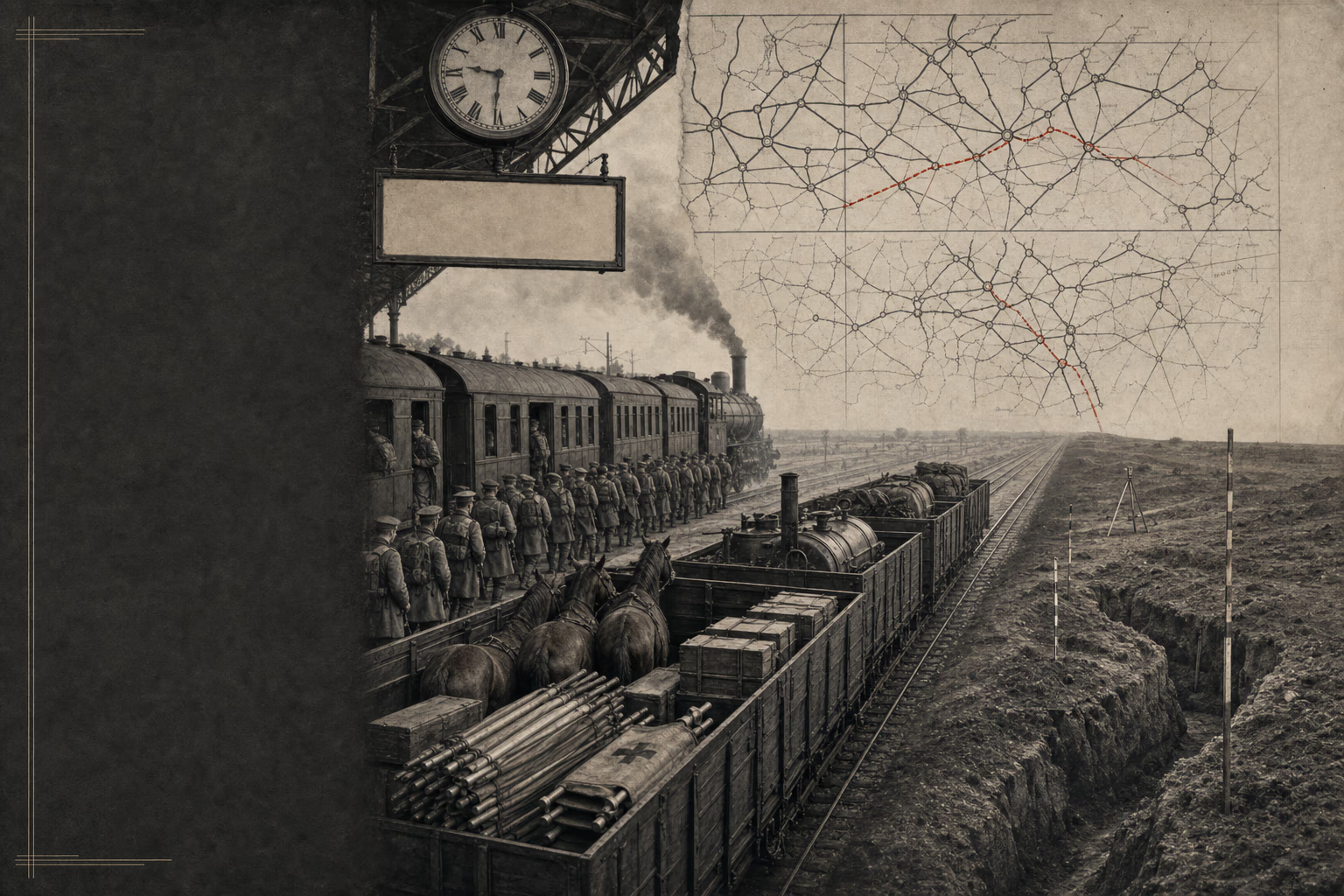
A 1914 station sequence aligns German and French operational rail movements before ending on a surveyed trench line after the Marne.Station notices, rail movement and trench survey

August–September 1914Berlin, Paris, Brussels and the Marne

The Timetable Empties the Cities

Industrial administration placed millions under arms with extraordinary speed, then met the friction, resistance and strategic error that no schedule could abolish.

Mobilisation notices appeared on walls and station clocks acquired military authority. Reservists left farms, factories and offices carrying the card that assigned each man to a depot and each depot to a train. Horses, field kitchens, shells and medical stores followed. Farewell crowds differed by city, day and photographer; some cheered, some wept, many performed the composure expected of them. The archive preserves visible enthusiasm more readily than private dread. What can be measured is the administrative feat: continental states moved armies of unprecedented size toward their borders in a matter of days.

Germany’s armies advanced through Belgium after reducing Liège’s forts with heavy artillery. Belgian resistance disrupted assumptions and made the invasion’s violence visible in burned towns, executed civilians and displaced families. French attacks in Alsace and Lorraine met devastating fire. The British Expeditionary Force withdrew with the French left as the German right wing moved toward and then east of Paris. Supply lines lengthened, formations lost contact and commanders altered the plan. Railways had delivered the armies; marching, combat, destroyed bridges and enemy action now governed them.

French command transferred troops across the rear and struck with the British along the Marne in early September. German armies withdrew to the Aisne. Neither side had secured the quick decision around which its opening campaign had been built. Trenches extended as each attempted to turn the other’s flank, eventually closing the western front from Switzerland to the North Sea. The schedule that emptied Europe’s cities had delivered no decisive peace. It had deposited mass society beside industrial weapons and opened a war whose demands would reach backward into every household and factory.

What survived
  • The German invasion of neutral Belgium brought Britain into the war and met Belgian military resistance as well as extensive violence against civilians.
  • The First Battle of the Marne halted the German advance in early September 1914; subsequent operations produced a continuous entrenched western front.

Hew Strachan (2001)Holger H. Herwig (2009)

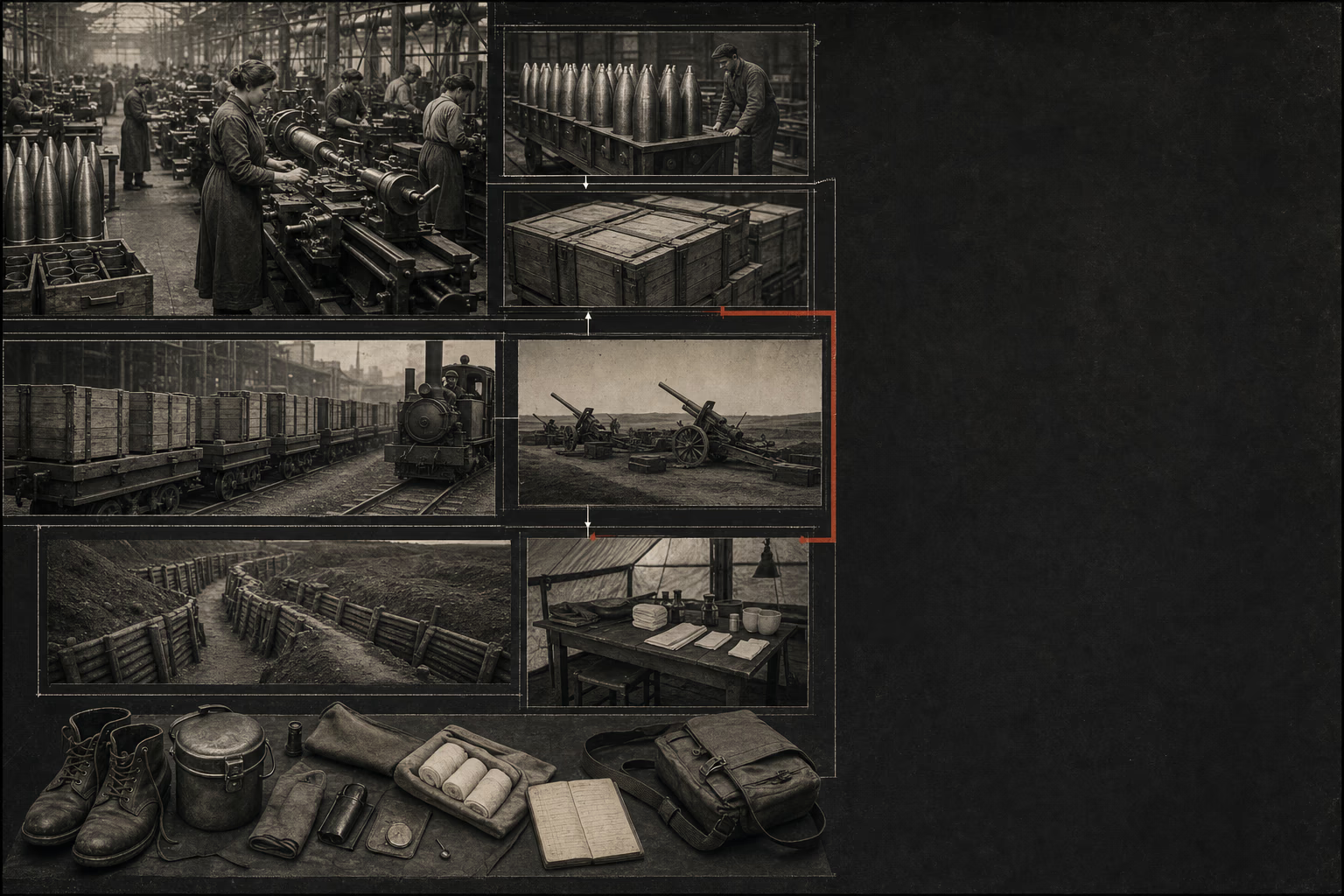
A measured logistics section joins shell factory, railway, battery, trench and aid post while one named unit’s equipment preserves the scale of individual service.Factory ledger, railhead plan, battery record and field dressing

AD 1915–1917Verdun, the Somme and Europe’s home fronts

The Front Becomes a Factory of Fire

Attrition joined factory, railway, gun line and household into a single system for sustaining destruction beyond the endurance of any battlefield army alone.

At Verdun, trucks climbed the Bar-le-Duc road in an almost continuous stream while narrow-gauge railways carried ammunition toward the guns. German command intended to seize ground whose defence would compel France to spend men and shells; French command made the fortress zone a test of national endurance. Artillery altered woods, ridges and villages faster than maps could record them. Units entered the line, suffered, withdrew and were replaced. The battle lasted ten months because roads, depots, factories and a rotating army kept feeding a place that could sustain no life by itself.

On the Somme, a week-long British bombardment preceded the assault of 1 July 1916. Wire and German positions survived in many sectors; British forces suffered almost sixty thousand casualties that day, including more than nineteen thousand dead. The battle continued into November as British, French and German armies adjusted tactics and poured fresh divisions into the salient. Soldiers from Canada, Australia, New Zealand, South Africa, Newfoundland, India, North Africa and other parts of European empires fought within the same industrial system. Their service and losses made the western front a global human field.

Total war reached far beyond the gun line. Governments directed metals, chemicals, food, labour, credit and shipping; factories reorganised around munitions; rationing and blockade made nutrition a weapon. On the Ottoman Empire’s eastern roads, the Committee of Union and Progress used wartime emergency to deport Armenian communities and carry out mass killing. More than a million Armenians died through massacre, starvation, exposure and disease. Europe’s civil war had made administrative command, ethnic suspicion and military necessity available as languages through which a government could attack an entire people.

What survived
  • Verdun lasted from February to December 1916 and depended on continuous French road and rail supply as well as the rotation of divisions through the sector.
  • British forces sustained 57,470 casualties on 1 July 1916 on the Somme, of whom 19,240 were killed.
  • The Ottoman deportation and mass murder of Armenians during the First World War killed at least one million people through direct violence and the conditions imposed on deportees.

Paul Jankowski (2013)William Philpott (2009)Ronald Grigor Suny (2015)

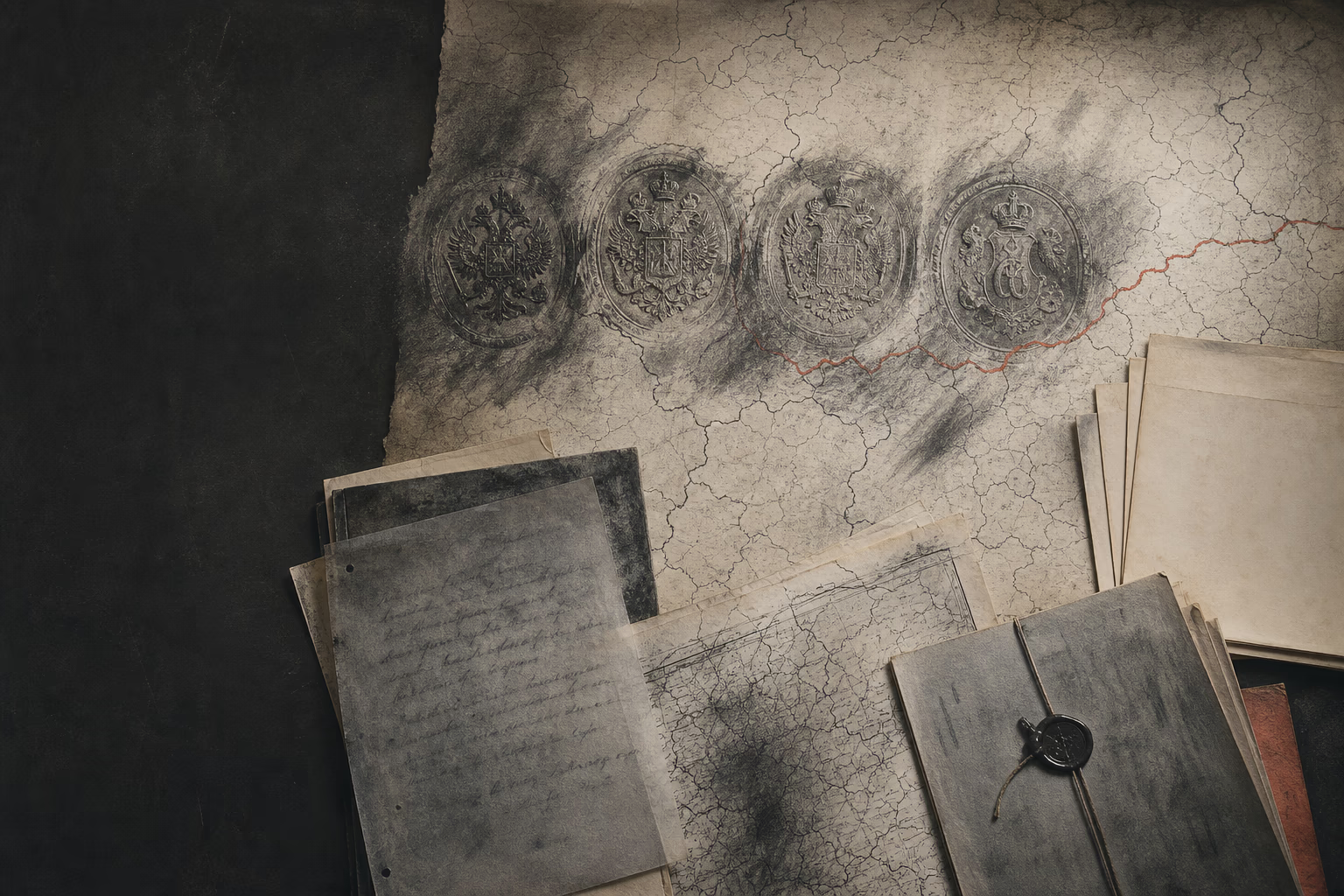
Four imperial seals recede from a dated map while the Decree on Peace, Brest-Litovsk map, national declarations and Compiègne armistice page remain sharp.Revolutionary decree, treaty map, declaration and armistice

AD 1917–1918Petrograd, Brest-Litovsk, Vienna, Constantinople and Compiègne

Four Empires Leave the Map

Revolution and military exhaustion destroyed four imperial orders, leaving national claims, armed movements and displaced populations to compete for their remains.

Bread queues and strikes in Petrograd became a revolution when soldiers refused to fire on demonstrators. Nicholas II abdicated in March 1917, ending Romanov rule. The Provisional Government preserved civil freedoms and continued the war, while soviets represented workers and soldiers and shared power uneasily. Lenin returned with a demand for peace, land and authority to the soviets. In November, the Bolsheviks seized the centres of government and claimed a revolution whose destination was larger than Russia: class rule would replace both empire and the bourgeois nation-state.

The Bolsheviks accepted the Treaty of Brest-Litovsk in March 1918, surrendering immense western territories to escape the war and defend their revolution. Civil war followed, drawing Red and White armies, peasant forces, national movements and foreign intervention into overlapping violence. The old empire did not dissolve into empty space. Finland, Poland, the Baltic lands, Ukraine, the Caucasus and other regions pursued incompatible forms of sovereignty while armies crossed them. Revolution offered universal emancipation and built a party power prepared to use terror against those classified as enemies of history.

Military defeat then ended the Hohenzollern, Habsburg and Ottoman imperial regimes. Sailors mutinied, councils formed, national committees declared independence and rulers departed. Austria-Hungary fragmented before the armistice; the German emperor abdicated; Ottoman ministers accepted defeat. On 11 November, the guns stopped on the western front. The end of battle did not end Europe’s civil war. Borders remained undecided, weapons remained in circulation and millions of veterans, prisoners, refugees and bereaved families entered states that had yet to establish either their territory or their authority.

What survived
  • Nicholas II abdicated in March 1917; the Bolsheviks overthrew the Provisional Government in November and signed the Treaty of Brest-Litovsk in March 1918.
  • German, Habsburg, Russian and Ottoman imperial authority collapsed during the war and its immediate aftermath, amid revolutions, national declarations and continuing armed conflict.

Robert Gerwarth (2016)Orlando Figes (1996)Mark Mazower (1998)

Act III · Peace loses its authority · AD 1919–1933

Peace Loses Its Authority

New borders create nations and minorities, revolution offers an alternative civilization, and mass movements exploit economic collapse and political abandonment.

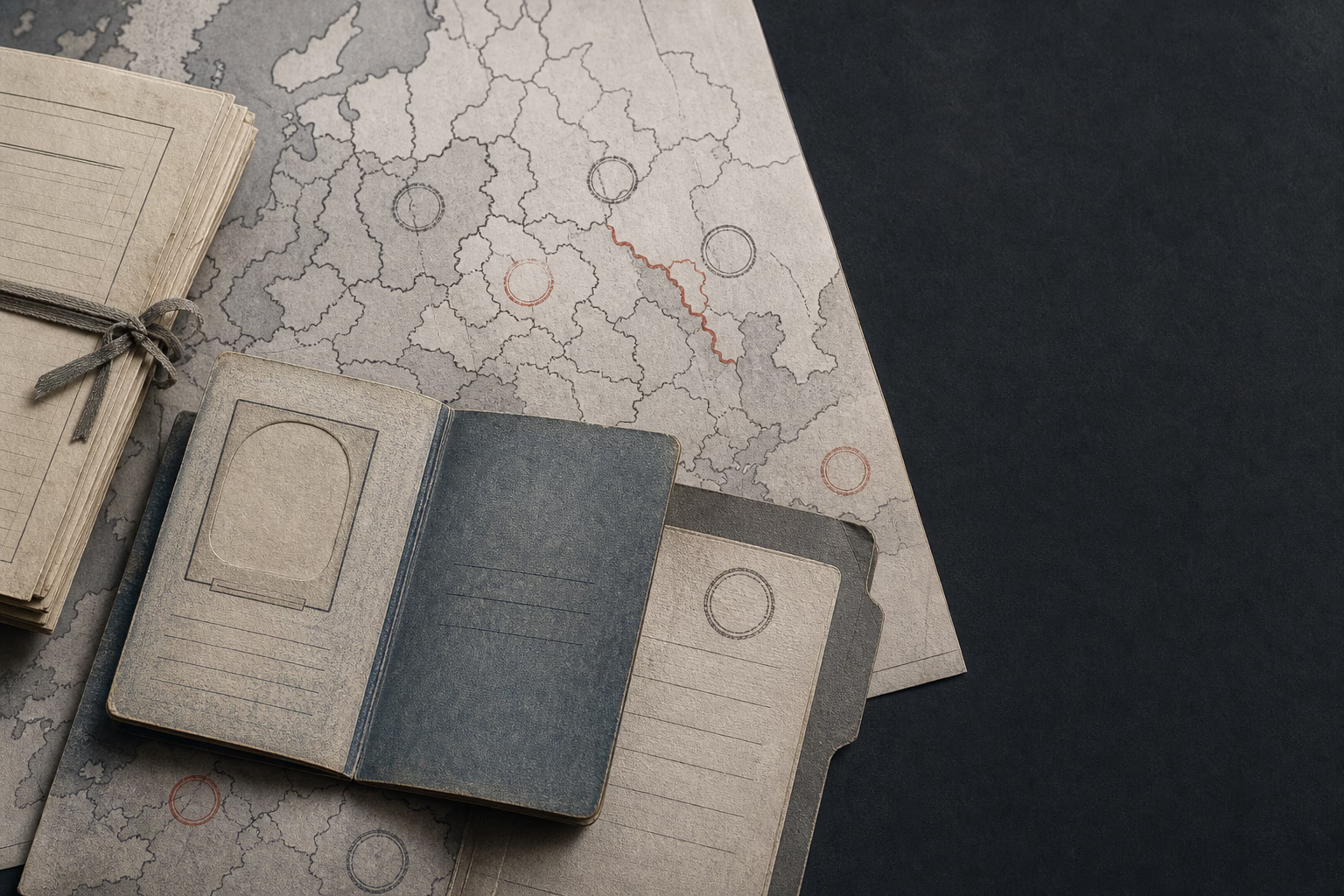
An atlas overlay compares European borders in 1914 and 1919 beside minority treaty terms, a refugee dossier form and a Nansen passport.Boundary overlay, minority treaty and refugee document

AD 1919–1923Paris, Geneva and Europe’s new frontiers

The Peace Creates the Stateless

The peace settlement enlarged national self-government while exposing people whose rights became fragile once no recognised state accepted them as members.

Delegates in Paris worked over maps from empires that no longer governed the ground. Poland returned; Czechoslovakia and the Kingdom of Serbs, Croats and Slovenes appeared; Romania enlarged; Austria and Hungary became separate states; Finland and the Baltic republics consolidated independence. These settlements answered real national aspirations suppressed or divided by imperial rule. They also placed Germans, Hungarians, Poles, Ukrainians, Jews and many others on the minority side of new frontiers. A line could give one people a state while giving its neighbour a minority treaty.

The victorious powers required several new states to guarantee minority rights and placed petitions within the League of Nations system. Enforcement depended on governments that often regarded cultural difference as a threat to national consolidation. Outside Europe, the mandate system redistributed former German and Ottoman territories under European supervision, preserving imperial command behind a language of tutelage. The principle of national self-determination therefore entered an unequal world: powerful nations possessed states and empires, new nations sought homogeneous sovereignty, and colonial peoples encountered promises whose application stopped at strategic interest.

War, revolution, border change and expulsion produced refugees whom no state recognised. Russian exiles received League of Nations travel documents associated with Fridtjof Nansen; Armenians and other displaced groups later used related certificates. The document enabled movement without restoring political membership. Here the universal language of rights met its hidden condition. A person required a public world in which the right to speak, work, reside and appeal would be guaranteed by fellow citizens and institutions. Once nationality disappeared, the bearer could possess rights in principle and find no authority obliged to honour them.

What survived
  • The post-war treaties created or enlarged European nation-states while leaving substantial national minorities outside the states identified with their language or nationality.
  • The League of Nations introduced the Nansen passport in 1922 for Russian refugees who lacked a recognised national passport; its use later extended to other displaced groups.

Hannah Arendt (1951/1958)Zara Steiner (2005)United Nations High Commissioner for Refugees (2024)

Redraw the peace

Four dated border records compare the imperial map of 1914 with the treaty map after 1919 and identify minorities and refugees produced by the new settlement.

Multinational authority

Political form
Dynastic and national empires
Population fact
Languages and religions cross every frontier
Unsettled question
Which peoples can claim a state of their own
War destroys the authorities that had contained competing national programmes.

German, Habsburg, Russian and Ottoman imperial borders organise most of central and eastern Europe before the war.

A Fascist party card and squad register remain distinct from a Bolshevik congress record and Soviet planning form along a parallel record corridor.Party card, violence record, congress minute and plan

AD 1922–1929Rome and Moscow

The Movement Seizes the State

Fascist and Bolshevik organisations treated power as the instrument of an unfolding historical mission rather than a bounded office within a plural society.

Blackshirt squads had already beaten socialists, burned labour offices and broken local administrations when Fascist columns gathered for the March on Rome in October 1922. The army could have dispersed them. King Victor Emmanuel III declined to sign a state of siege and invited Benito Mussolini to form a government. Appointment gave the movement what street violence alone could not secure: ministries, police authority and legal access to the machinery of the state. Fascists then altered electoral law, murdered or silenced opponents and converted a coalition government into dictatorship.

Italian Fascism fused nationalism, veterans’ violence, spectacle and a leader cult, claiming that party and nation should become one. Its dictatorship retained the monarchy, Church, army and much private property, and it never achieved the degree of social penetration or organised mass murder reached by Stalinism and Nazism. It changed Europe’s political grammar all the same. A movement could present legality as weakness, violence as moral energy and permanent mobilisation as a higher form of citizenship. Parties across the continent learned from its uniforms, rallies and conquest of public space.

In the Soviet Union, the Bolshevik party had arisen as an alternative source of authority before absorbing the state. Lenin’s death opened a struggle in which Stalin accumulated command through party appointments and alliances. By 1929 he had defeated the principal rivals and launched forced collectivisation and rapid industrialisation. The regime claimed access to the law of history itself: classes marked as obsolete could be expropriated, deported or eliminated so that a new society could be built. Ideology ceased to offer an opinion about reality. It became an administrative key that assigned every person a place in history’s supposed movement.

What survived
  • Mussolini became prime minister by royal appointment after the March on Rome; Fascist violence and subsequent legal changes dismantled parliamentary opposition.
  • By 1929 Stalin had defeated major party rivals and begun forced collectivisation alongside the First Five-Year Plan.

Emilio Gentile (1996)Sheila Fitzpatrick (2008)Hannah Arendt (1951/1958)

A Berlin employment office, plural election posters, the Reichstag Fire Decree and the Enabling Act narrow toward a single stamped field of authority.Employment record, ballot wall, emergency decree and enabling law

AD 1929–1933Berlin

The Republic Loses the Street

Economic collapse and political abandonment allowed the Nazi movement to turn electoral strength, organised violence and elite miscalculation into state power.

Unemployed Berliners waited outside labour exchanges as banks failed, firms closed and parliamentary coalitions broke apart. Germany’s Depression was exceptionally severe. Governments increasingly relied on presidential emergency decrees because the Reichstag could not sustain stable majorities. Communists and Nazis expanded among voters who believed the republic had become incapable of action. Street formations fought for neighbourhoods and meeting halls. Political life offered mass belonging to people whose work, savings and associations had been stripped away, while every failed cabinet taught citizens that ordinary representation produced only drift.

The Nazi movement joined contradictory constituencies through an ideology presented as one total explanation. Defeat in 1918 became betrayal; economic crisis became conspiracy; class conflict became racial unity; antisemitism identified the Jew as the hidden author of both finance capitalism and Bolshevism. Propaganda, disciplined local organisation, ritual and violence gave isolated grievance a collective world. The party never won a majority in a free national election. Its vote peaked in July 1932, declined in November and remained large enough to make conservative elites believe Hitler could supply popular support to a government they would control.

President Hindenburg appointed Hitler chancellor on 30 January 1933. The Reichstag fire decree suspended basic liberties and enabled mass arrest. On 23 March, deputies meeting amid intimidation passed the Enabling Act, allowing the cabinet to legislate without parliament; Communist deputies had been arrested or excluded, and only the Social Democrats present voted against. Trade unions were destroyed, parties dissolved and public institutions coordinated under Nazi authority. The republic did not fall through election alone. Appointment, emergency power, police coercion and legislative surrender carried a mass movement through the legal doors, after which it broke the house around them.

What survived
  • The Nazi Party won 37.3 percent of the vote in July 1932, fell to 33.1 percent in November and entered government when Hindenburg appointed Hitler chancellor.
  • The Reichstag Fire Decree suspended constitutional protections in February 1933; the Enabling Act gave Hitler’s cabinet legislative power the following month under coercive conditions.

Richard J. Evans (2003)Adam Tooze (2006)

Act IV · Total dominion · AD 1935–1945

Total Dominion

Racial law, Stalinist terror, aggressive war, occupation and genocide reveal states seeking command without limit before victory leaves Europe ruined, diminished and divided.

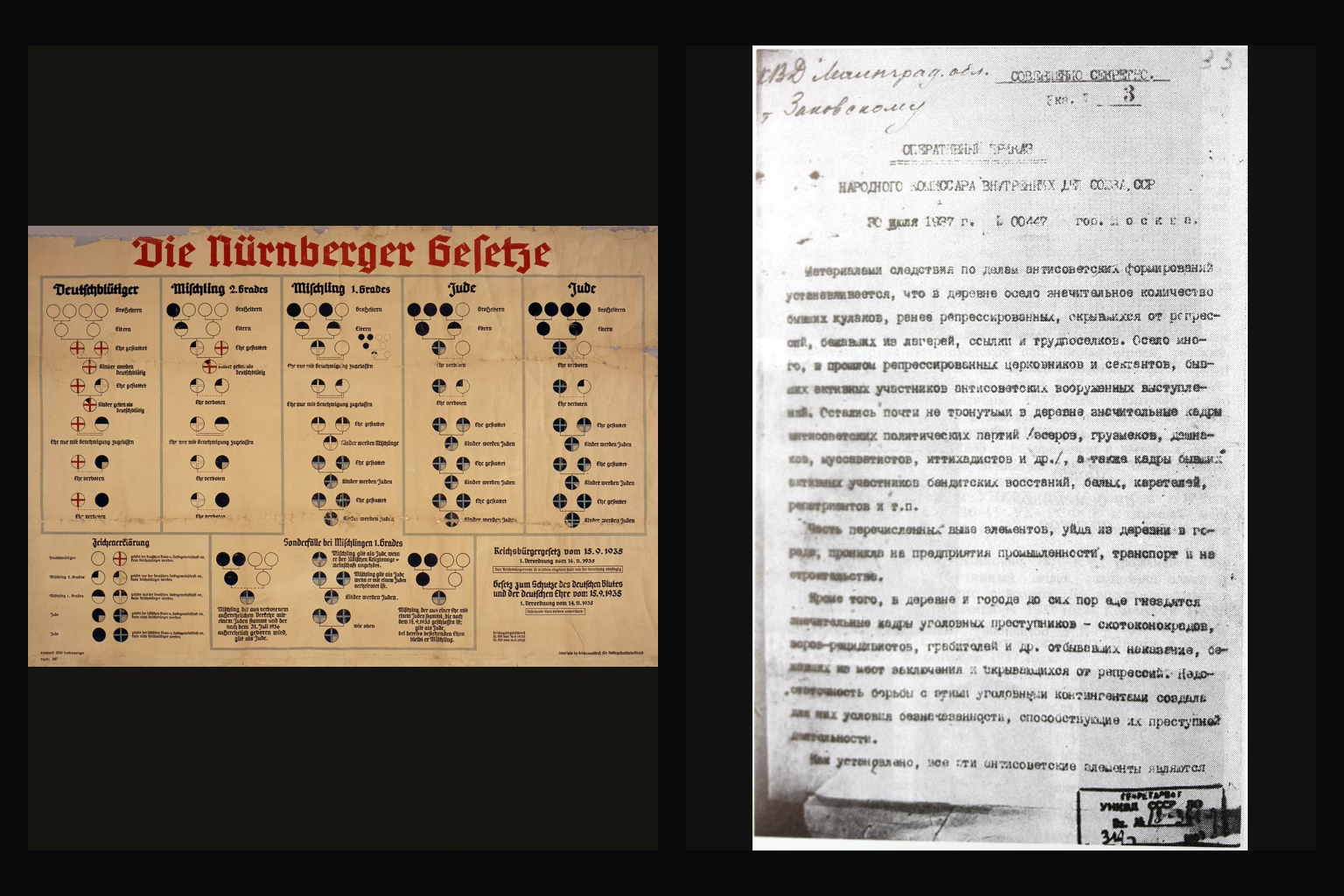
The Nuremberg racial chart and NKVD Order 00447 occupy separate document planes with their dates and systems of classification kept distinct.Nuremberg racial chart · 14 November 1935 | NKVD Order 00447 · 30 July 1937

AD 1935–1938Nuremberg and the Soviet Union

Law and Terror Reclassify the Human Being

Nazi racial legislation and Stalinist mass operations used distinct systems of classification to place whole categories of people outside ordinary protection.

Printed charts translated the Nuremberg Laws into grandparents, marriages and fractions of ancestry. The Reich Citizenship Law of September 1935 reserved full political membership for people classified as being of German or related blood. The Law for the Protection of German Blood and German Honour prohibited marriages and sexual relations between Jews and those the regime defined as German. Later decrees converted a religious and familial past into an administrative fate. A person’s neighbours, war service, profession, baptism or own understanding of identity could not answer a category constructed by the state.

Exclusion advanced through schools, professions, property registers and public space before breaking into organised violence. During the November pogrom of 1938, Nazi organisations and participants across Germany and annexed Austria burned synagogues, smashed Jewish businesses, murdered Jews and sent about thirty thousand Jewish men to concentration camps. The regime presented the violence as spontaneous anger and imposed a collective fine on its victims. Party direction, police orders, racial law and expropriation had converged: citizenship was removed first, making every later assault easier to administer and harder to contest.

Across the Soviet Union, the Great Terror followed a different ideological classification and institutional path. NKVD Order No. 00447 set regional quotas for the arrest, execution or imprisonment of people labelled former kulaks, criminals and anti-Soviet elements; other operations targeted national categories. Confession was manufactured, association became guilt and local officials competed under centrally approved targets. The Nazi and Stalinist systems did not share the same victims, racial doctrine or timetable. Each pushed rule beyond obedience toward total domination, isolating human beings until ideology and terror could decide who they were, what reality meant and whether ordinary law reached them at all.

What survived
  • The Nuremberg Laws of September 1935 stripped Jews of Reich citizenship and prohibited marriages and sexual relations between Jews and people classified as German or related blood.
  • NKVD Order No. 00447 initiated a mass operation in 1937 using centrally approved categories and numerical limits for execution or imprisonment that regional officials sought to expand.

German History in Documents and Images (1935)J. Arch Getty and Oleg V. Naumov (1999)Hannah Arendt (1951/1958)

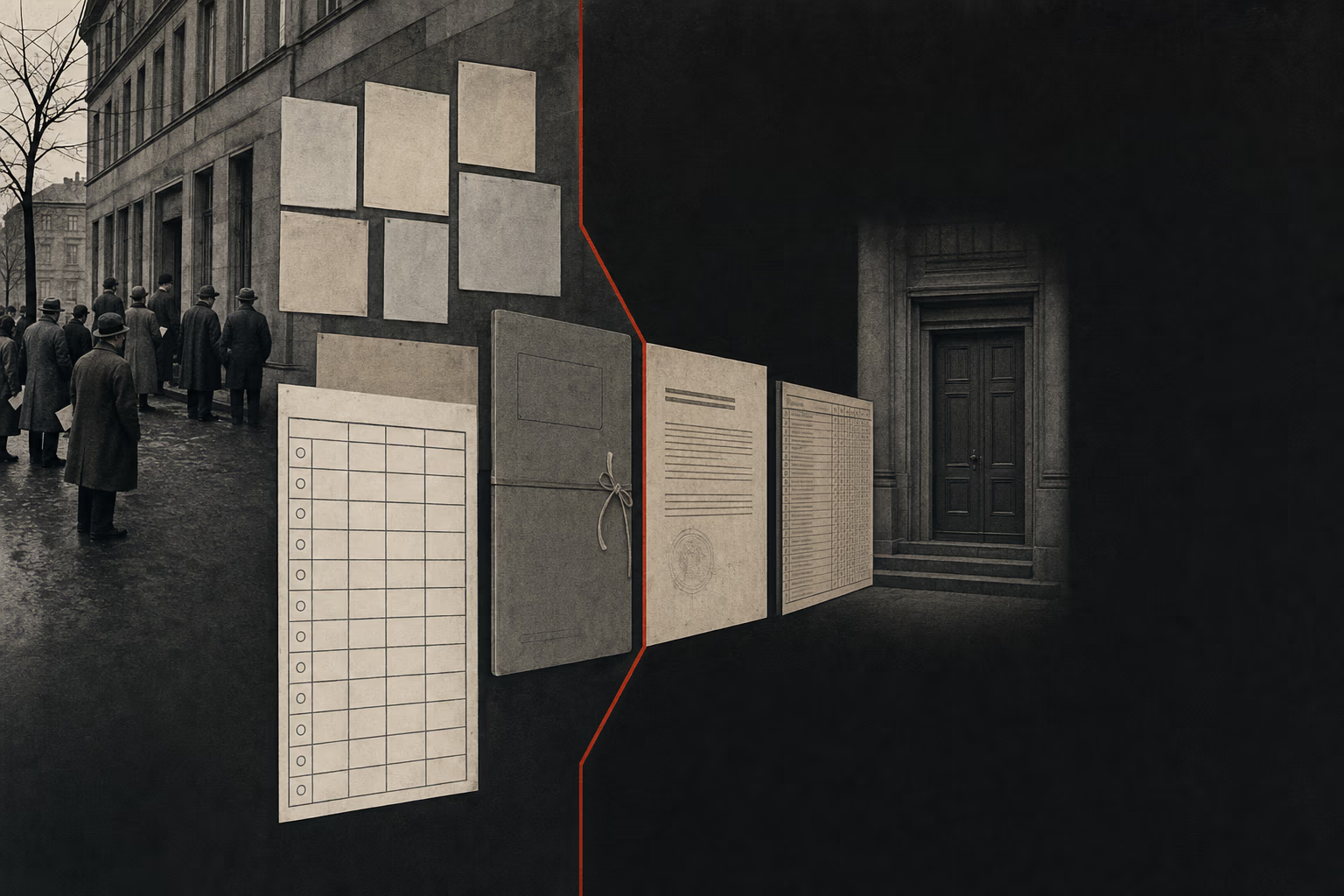
Lose the protecting document

Four static document states follow a recognised citizen, a stateless refugee, a Nansen passport holder and a German Jew deprived of full citizenship, showing what a document can and cannot guarantee.

A polity stands behind the paper

Document
National passport
Status
Citizen of an internationally recognised state
Protection
Domestic rights and diplomatic standing rest on membership
The paper works because institutions acknowledge the political person it names.

An ordinary passport records identity and nationality because a recognised state accepts the bearer as a member and other states accept that guarantee.

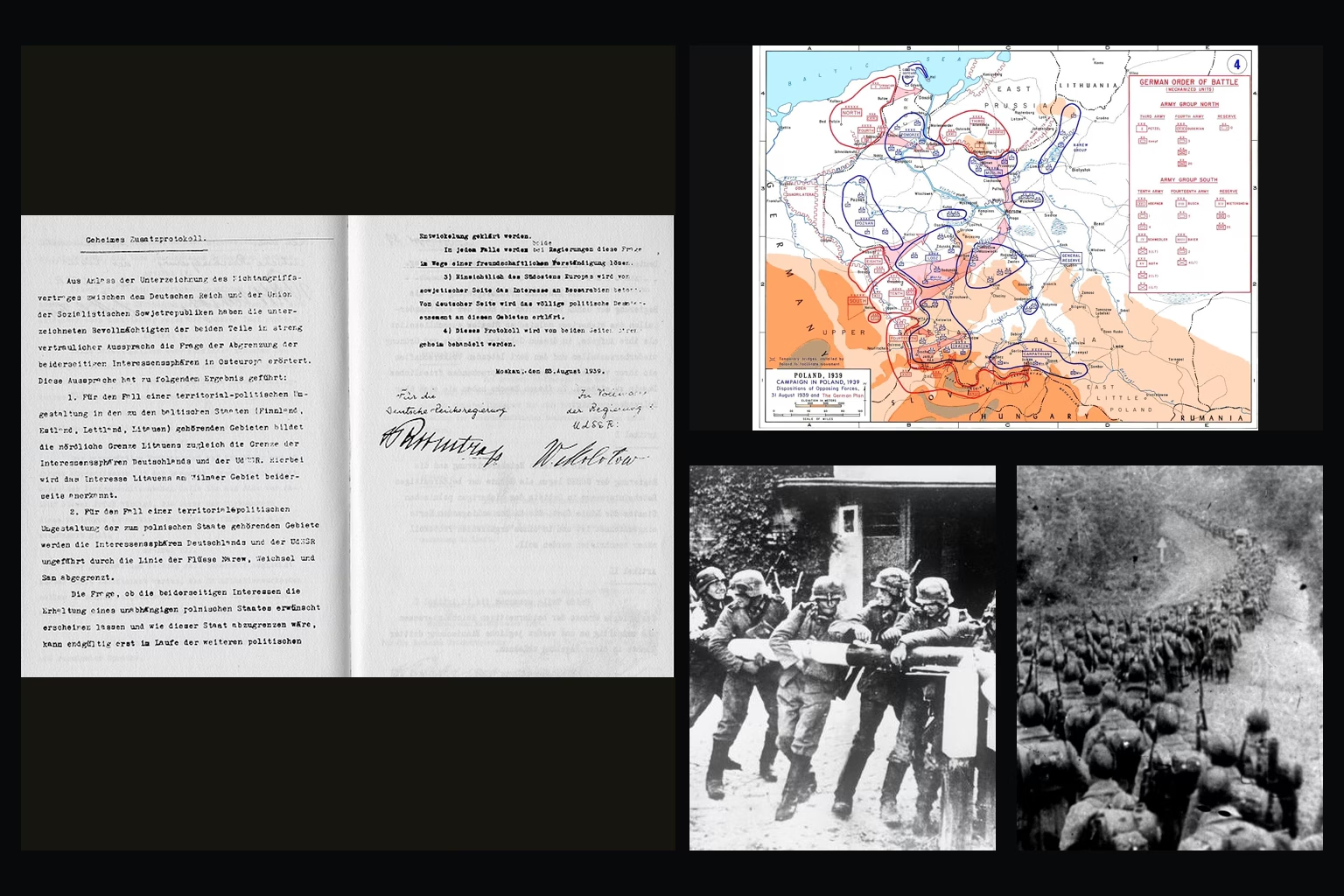
The German–Soviet secret protocol, a dated invasion map and distinct German and Soviet occupation records form a four-part sequence.Secret protocol · 23 August 1939 | German and Soviet invasion records

AD 1939–1942Moscow, Warsaw and German-occupied Europe

The Pact Opens Poland

The German–Soviet pact cleared the way for the destruction of Poland, after which German conquest extended racial occupation and a war of annihilation across Europe.

On 23 August 1939, German and Soviet foreign ministers signed a non-aggression pact in Moscow. A secret protocol placed Finland, Estonia and Latvia in the Soviet sphere, Lithuania principally in the German sphere, divided Poland along a proposed line and acknowledged Soviet interest in Bessarabia; a later agreement revised the division. Germany invaded Poland from the west on 1 September; Britain and France declared war two days later; the Soviet Union entered eastern Poland on 17 September. The Polish state fought between two invading powers and was partitioned. Soviet authorities deported civilians and executed Polish prisoners, including thousands murdered by the NKVD at Katyn and related sites.

German occupation attacked the Polish nation and made racial hierarchy a form of government. Officials annexed western districts, expelled Poles, confiscated property, closed institutions and murdered members of the educated and political elite. Jews were marked, dispossessed, concentrated and forced into ghettos under conditions of hunger and disease. Elsewhere, rapid German victories brought Denmark, Norway, the Low Countries, France, Yugoslavia and Greece under direct or collaborating regimes of unequal severity. Occupation did not mean one uniform system; everywhere it subordinated law and human life to German war and racial aims.

Germany invaded the Soviet Union on 22 June 1941, breaking the pact and opening the largest land war in history. Military orders treated Soviet political officers and many civilians as categories outside protection. Einsatzgruppen and other German units, aided in varying places by police, auxiliaries and collaborators, shot Jewish communities behind the front. The invasion joined anti-Bolshevik war to racial colonisation and mass murder. Soviet resistance absorbed catastrophic losses, relocated industry eastward and eventually stopped the advance before Moscow; the war’s centre of gravity moved into eastern Europe.

The European civil war again became inseparable from world power. Britain fought through imperial bases, armies and resources; Commonwealth and colonial troops served across several theatres; the United States supplied the Allies before entering after Japan’s attack on Pearl Harbor; Japan pursued its own empire across China, Southeast Asia and the Pacific. These conflicts had causes and actors beyond Europe. Their conjunction came from a world already organised through imperial territories, maritime command, industrial supply and competing great powers. Europe’s war had opened every circuit at once.

What survived
  • The secret protocol to the German–Soviet pact divided territories in eastern Europe into spheres of interest before Germany and the Soviet Union invaded Poland from west and east.
  • Operation Barbarossa began on 22 June 1941 and was conceived by Nazi Germany as both a military campaign and a racial-ideological war of destruction.

Governments of Germany and the Soviet Union (1939)Timothy Snyder (2010)Mark Mazower (1998)

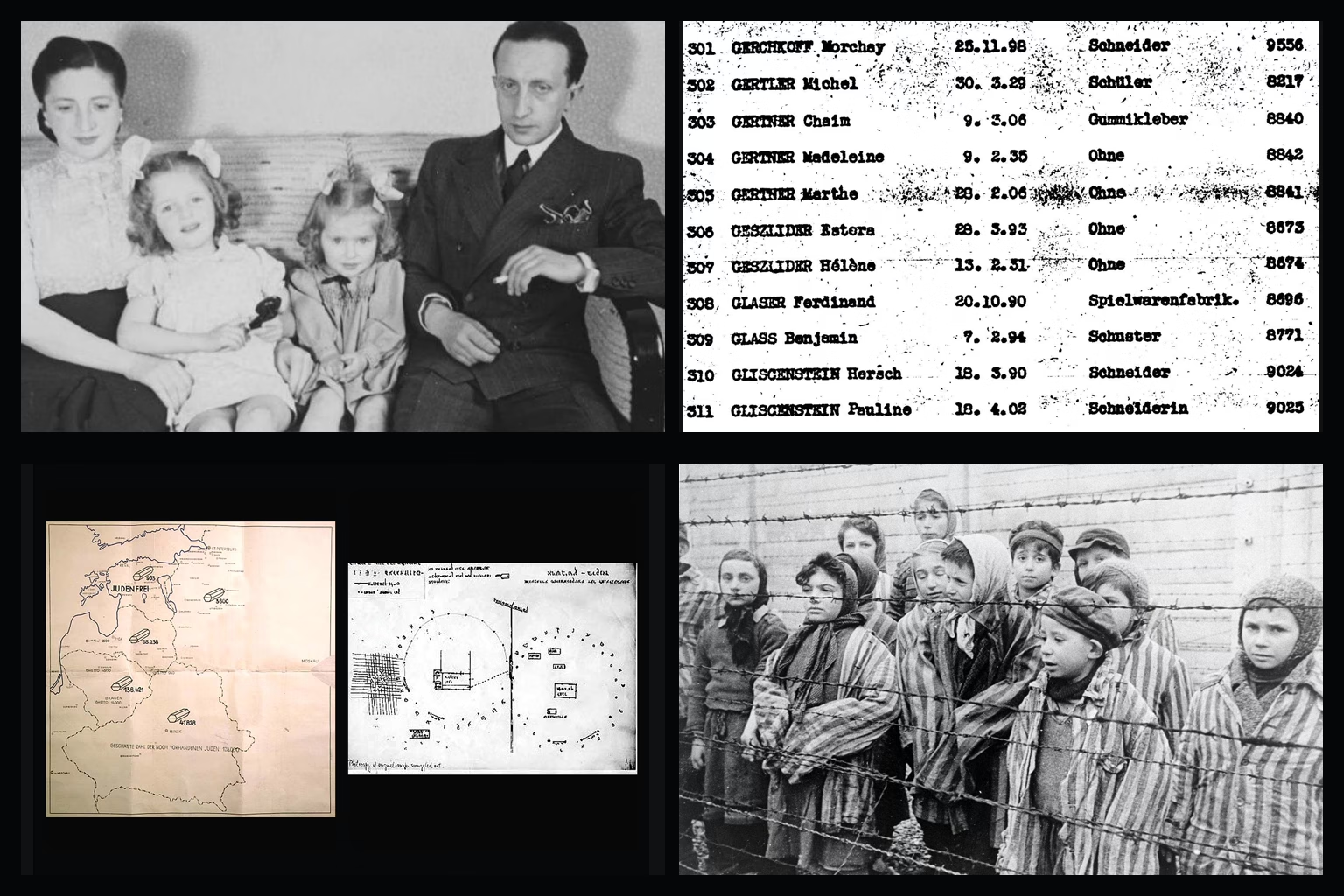
The named Münzer family before persecution appears beside a Drancy deportation list, the Stahlecker perpetrator map, the Auschwitz Protocols camp map and named child survivors after liberation.Münzer family · Drancy list · perpetrator and camp maps · named survivors

AD 1941–1944German-occupied Europe

European Jewry Is Marked for Murder

Nazi Germany joined racial ideology, state offices, occupation power, mass shooting, rail transport and killing centres in an attempt to murder every Jew it could reach.

Before the war, about nine and a half million Jews lived in Europe. They spoke many languages, held different religious and political commitments, and belonged to towns, cities and nations from Britain to the Soviet borderlands. German conquest placed most of them within Nazi reach. Registration identified people; decrees removed work and property; badges marked bodies; ghettos concentrated families behind walls and guards. Hunger, disease and forced labour killed many before deportation. Each measure narrowed the space in which a Jewish person could act while making the individual increasingly visible to a persecuting administration.

The invasion of the Soviet Union brought systematic mass shooting. German Einsatzgruppen, Order Police battalions and other units, with local auxiliaries and collaborators in many places, assembled Jewish men, women and children at ravines, pits and forests and murdered them by gunfire. At Babyn Yar outside Kyiv, German units and auxiliaries shot 33,771 Jews on 29 and 30 September 1941 according to the perpetrators’ own report. Similar actions crossed the occupied east. The killing was public enough to require roads, cordons, transport, lists, ammunition and the participation or witness of many institutions and people.

Deportation trains then carried Jews from ghettos and communities across occupied Europe to killing centres. Chełmno used gas vans; Bełżec, Sobibór and Treblinka formed the principal killing sites of Operation Reinhard; Auschwitz-Birkenau combined a vast camp complex with mass killing by gas. The Wannsee meeting of January 1942 coordinated agencies already participating in the Final Solution. Railway offices scheduled cars, police guarded transports, ministries negotiated the surrender of Jews from allied and occupied states, and camp personnel converted arrivals into a repeated procedure of selection and death.

Jews acted under conditions designed to make effective action impossible. Families hid children, preserved diaries and photographs, organised food and schools inside ghettos, escaped to forests, joined partisan groups and revolted at Warsaw, Treblinka, Sobibór and Auschwitz. Individuals, churches, diplomats and resistance networks helped some Jews evade capture; in Denmark, civil society and organised resistance, aided by Swedish reception, carried most of the country’s Jews to safety. Many other authorities and neighbours collaborated, denounced or appropriated. Rescue remained the exception inside a continental system built to close every exit.

Nazi Germany and its collaborators murdered six million Jews, destroying roughly two-thirds of European Jewry. The regime also persecuted and murdered Roma and Sinti, disabled people, Soviet prisoners of war, Polish civilians, political opponents, gay men and others under related and distinct programmes of violence. The Holocaust was the attempt to annihilate the Jews as a people everywhere German power could reach. Liberation ended the killing where Allied armies arrived; it could not restore the murdered families, languages, congregations and neighbourhoods whose absence became part of Europe’s landscape.

What survived
  • Nazi Germany and its collaborators murdered six million European Jews through mass shooting, deliberate deprivation, forced labour, deportation and killing centres.
  • The perpetrators’ report for 29–30 September 1941 recorded 33,771 Jews murdered at Babyn Yar outside Kyiv.
  • The Wannsee Conference coordinated the participation of German ministries and agencies in a murder programme already under way.
  • Jewish communities preserved diaries, photographs, underground archives and records of resistance that now form an indispensable documentary account of the persecution and murder.

United States Holocaust Memorial Museum (2026)Yad Vashem (2026)Raul Hilberg (2003)Saul Friedländer (1997–2007)

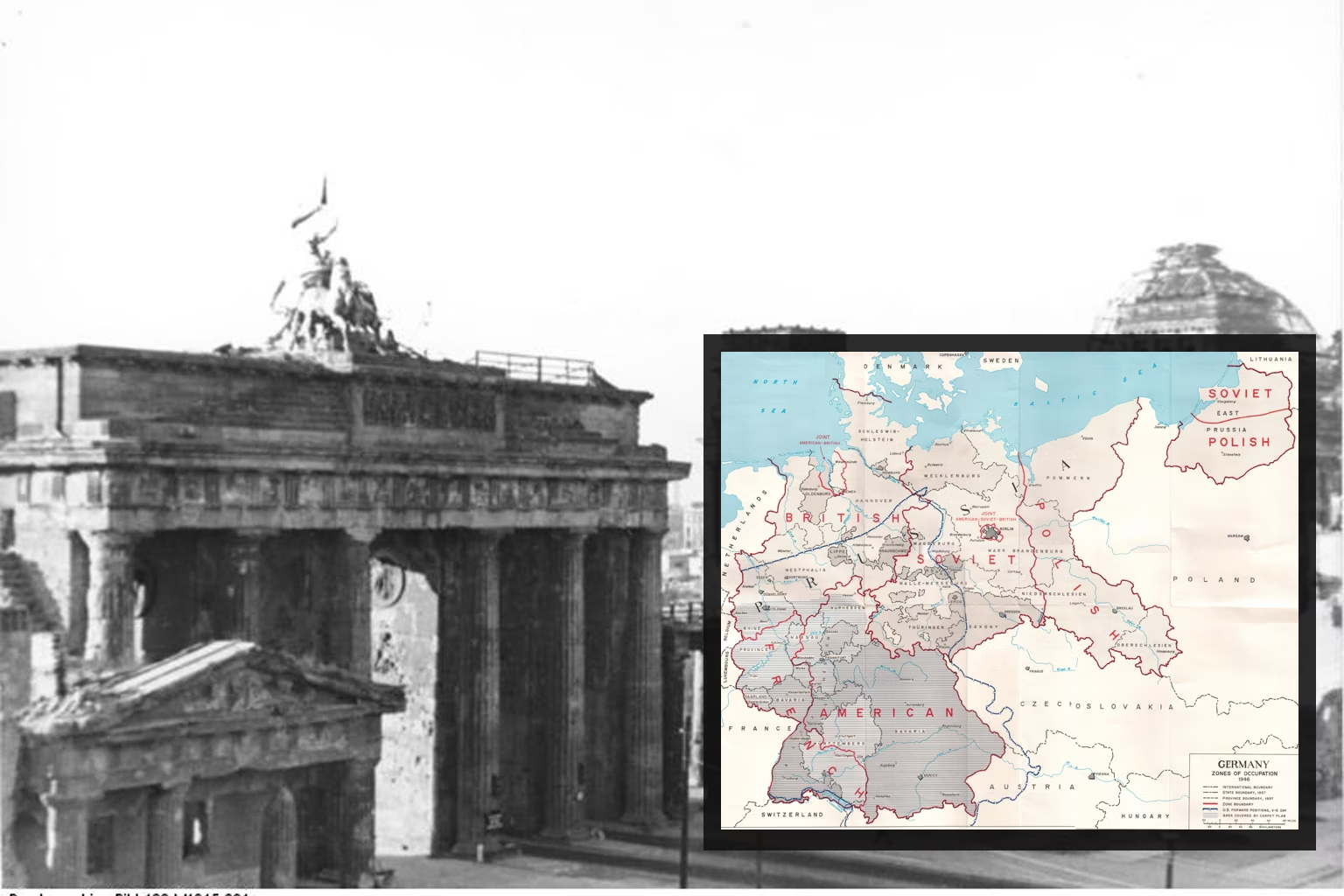
Otto Donath’s 1945 panorama of ruined Berlin is overlaid by a United States Army map of the American, British, French and Soviet occupation zones.Otto Donath · Berlin, 1945 | U.S. Army occupation-zones map

AD 1945Berlin, Yalta and Potsdam

Berlin Falls and Europe Is Divided

The destruction of Nazi Germany ended the European civil war in liberation, occupation and a transfer of continental power to the United States and Soviet Union.

Soviet artillery opened against Berlin in April 1945 after an advance that had carried the Red Army from the disasters of 1941 across eastern Europe. American, British, Canadian, French, Polish and other Allied forces had crossed Germany from the west after liberating western Europe; Soviet forces, including soldiers from across the USSR, bore the principal weight of destroying the Wehrmacht on the eastern front. Hitler killed himself on 30 April. Germany signed unconditional surrender in early May. No German state remained capable of governing, and the victorious armies divided responsibility for occupation.

Liberation opened camps and prisons onto a continent already filled with displaced people. Survivors searched lists and railway stations for relatives. Former forced labourers, prisoners of war, refugees, soldiers and civilians moved through ruined transport systems. Hunger and disease persisted. Sexual violence accompanied conquest, especially on the eastern advance, while revenge and expulsion uprooted German populations from territories transferred to Poland and the Soviet Union and from restored Czechoslovakia. Victory removed the criminal regime without returning Europe to the social world that had existed before it.

At Yalta and Potsdam, Allied leaders addressed occupation zones, borders, reparations and the treatment of Germany. Poland shifted west; Soviet authority stood across eastern and central Europe; the United States remained militarily and economically indispensable in the west. Britain and France were victors with empires, armies and global responsibilities, though neither could restore the continent’s former command of world affairs. The war had made American productive power and Soviet military power decisive inside Europe. The global system Europe had built now transmitted influence toward the continent as much as away from it.

The struggle from 1914 to 1945 had been a European civil war because its central questions concerned Europe’s political order: which nations would rule which territories, whether revolution would replace inherited states, whether citizenship rested on law or race, and whether any limit stood above a movement claiming history’s authority. It became two world wars because Europe possessed empires, sea lanes, finance, industries and rival powers with global reach. In 1945 those questions had consumed the institutions that carried them. The continent survived in ruins, divided beneath powers larger than any European state.

What survived
  • Germany surrendered unconditionally in May 1945 after Soviet forces captured Berlin and the western Allies occupied the remainder of the country from the west and south.
  • The Potsdam settlement placed Germany and Berlin under four-power occupation and recognised major territorial changes that moved Poland westward.
  • By 1945 the United States and Soviet Union possessed the military, industrial and political weight that structured Europe’s post-war division.

Ian Kershaw (2015)Governments of the United States, United Kingdom and Soviet Union (1945)Tony Judt (2005)Mark Mazower (1998)

Open the fault lines

Five complete dated states align state and empire, citizenship, mass politics, industrial mobilisation and party terror from 1871 to 1945, showing how the layers cease to support one another and split the continent.

The layers still align

State and empire
German union shifts the continental balance
Citizenship
Legal equality expands within unequal national and imperial orders
Mass politics
Parties, newspapers and associations enlarge public participation
Industrial mobilisation
Rail and factory capacity grow under civilian and military planning
Party terror
No movement yet commands the state as an unlimited instrument
National achievement and imperial hierarchy coexist inside an armed diplomatic order.

A new German nation-state enters a Europe of dynastic empires, expanding citizenship and global imperial competition.

Treaties · mobilisation orders · railway plans · passports · citizenship law · party records · occupation files · deportation documents · survivor archives

What survived

  1. Mark MazowerDark Continent: Europe's Twentieth CenturyAllen Lane, 1998
  2. Tony JudtPostwar: A History of Europe Since 1945Penguin Press, 2005
  3. Christopher ClarkIron Kingdom: The Rise and Downfall of Prussia, 1600–1947Allen Lane, 2006
  4. Ruth HarrisDreyfus: Politics, Emotion, and the Scandal of the CenturyAllen Lane, 2010
  5. Hannah ArendtThe Origins of TotalitarianismHarcourt, Brace and Company / Meridian Books, 1951/1958
  6. David StevensonArmaments and the Coming of War: Europe, 1904–1914Clarendon Press, 1996
  7. Christopher ClarkThe Sleepwalkers: How Europe Went to War in 1914Allen Lane, 2012
  8. T. G. OtteJuly Crisis: The World’s Descent into War, Summer 1914Cambridge University Press, 2014
  9. Hew StrachanThe First World War, Volume I: To ArmsOxford University Press, 2001
  10. Holger H. HerwigThe Marne, 1914: The Opening of World War I and the Battle That Changed the WorldRandom House, 2009
  11. Paul JankowskiVerdun: The Longest Battle of the Great WarOxford University Press, 2013
  12. William PhilpottBloody Victory: The Sacrifice on the SommeLittle, Brown, 2009
  13. Ronald Grigor SunyThey Can Live in the Desert but Nowhere Else: A History of the Armenian GenocidePrinceton University Press, 2015
  14. Robert GerwarthThe Vanquished: Why the First World War Failed to EndAllen Lane, 2016
  15. Orlando FigesA People’s Tragedy: The Russian Revolution, 1891–1924Jonathan Cape, 1996
  16. Zara SteinerThe Lights That Failed: European International History, 1919–1933Oxford University Press, 2005
  17. United Nations High Commissioner for RefugeesA Century of Mobility: A Glimpse into the History of Refugee Travel DocumentsUNHCR Archives and Records, 2024
  18. Emilio GentileThe Sacralization of Politics in Fascist ItalyHarvard University Press, 1996
  19. Sheila FitzpatrickThe Russian RevolutionOxford University Press, third edition, 2008
  20. Richard J. EvansThe Coming of the Third ReichAllen Lane, 2003
  21. Adam ToozeThe Wages of Destruction: The Making and Breaking of the Nazi EconomyAllen Lane, 2006
  22. German History in Documents and ImagesThe Reich Citizenship Law (September 15, 1935) and the First Regulation to the Reich Citizenship Law (November 14, 1935)German Historical Institute, 1935
  23. J. Arch Getty and Oleg V. NaumovThe Road to Terror: Stalin and the Self-Destruction of the Bolsheviks, 1932–1939Yale University Press, 1999
  24. Governments of Germany and the Soviet UnionTreaty of Non-Aggression and Secret Additional ProtocolPrimary diplomatic documents, 1939
  25. Timothy SnyderBloodlands: Europe Between Hitler and StalinBasic Books, 2010
  26. United States Holocaust Memorial MuseumFinal Solution: OverviewHolocaust Encyclopedia, 2026
  27. Yad VashemYad Vashem CollectionsYad Vashem Collections, 2026
  28. Raul HilbergThe Destruction of the European JewsYale University Press, third edition, 2003
  29. Saul FriedländerNazi Germany and the Jews, Volumes I–IIHarperCollins, 1997–2007
  30. Ian KershawTo Hell and Back: Europe, 1914–1949Allen Lane, 2015
  31. Governments of the United States, United Kingdom and Soviet UnionProtocol of the Proceedings of the Berlin ConferencePotsdam Agreement, 1945