








Rome Crowns a Saxon
Otto I joined German kingship, Italian rule and the western Roman office beneath one crown.
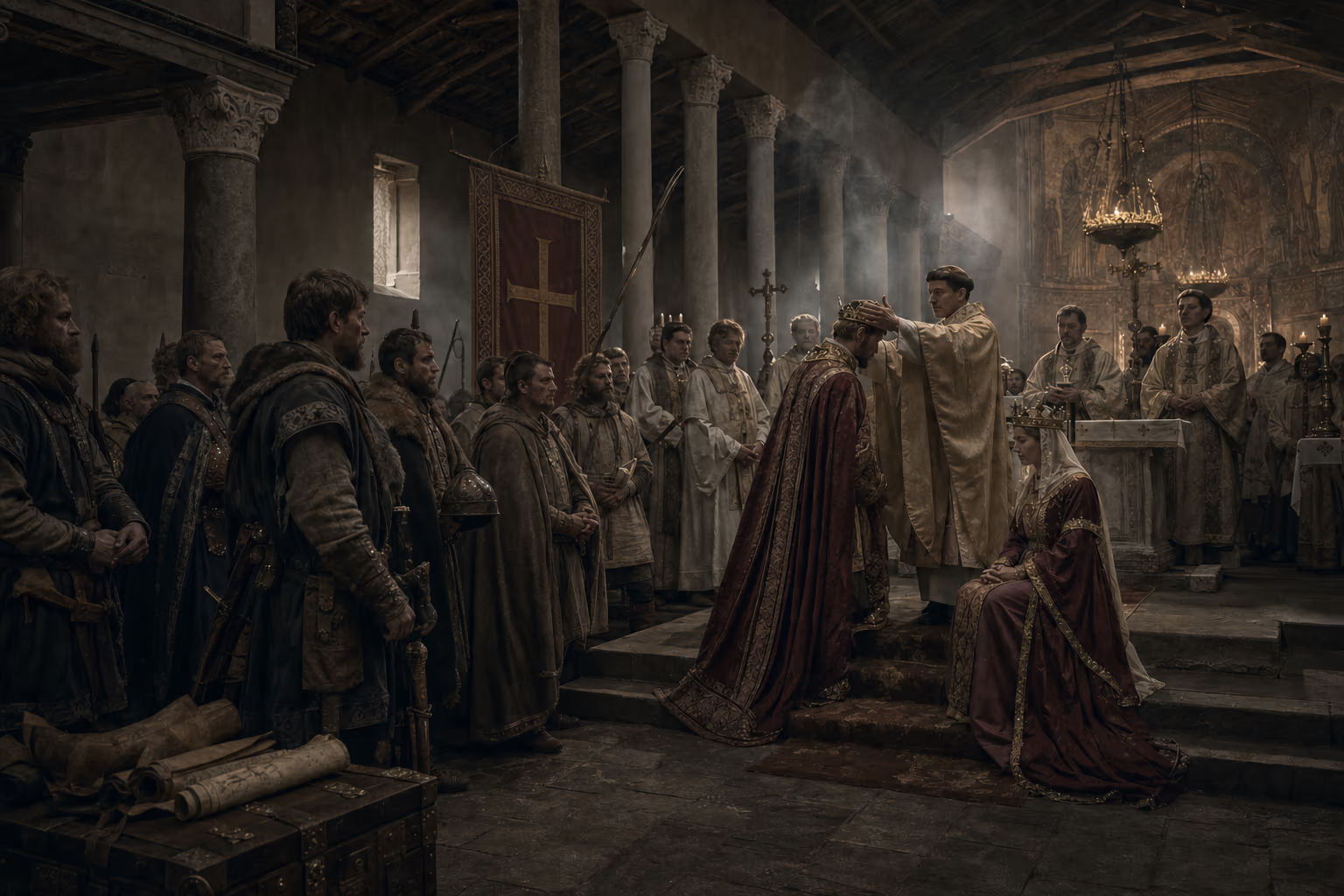
On 2 February 962, Pope John XII placed the imperial crown on Otto I in Old St Peter’s. Otto had crossed the Alps as king of East Francia and Italy, victorious over rival magnates and Magyar raiders. He knelt in the basilica of the apostle and rose as emperor, while his wife Adelaide received the imperial crown beside him. A Saxon dynasty now held the western Roman office. The rite gave lands north and south of the Alps a common summit whose authority reached beyond any one duchy or kingdom.
The crown did not conjure a uniform state. Otto ruled through dukes, counts, bishops, abbots, royal lands and assemblies whose rights differed from place to place. He issued diplomas, confirmed possessions, judged disputes and appointed men capable of carrying his authority when he moved elsewhere. In Italy he required cooperation from bishops, cities and nobles; in Saxony and Franconia he relied on aristocratic households with power of their own. Imperial government lived in these relationships, and the Roman title raised their ruler above the several crowns and lordships that sustained him.
The imperial office joined memory to ambition. It recalled Charlemagne, Christian Rome and the duty to defend the western church; it also demanded repeated journeys across difficult country. Every coronation, assembly and charter renewed a bond that geography continually stretched. The Empire therefore began as a union of rank, law and presence rather than as a capital commanding provinces. Its first durable achievement was to place a multitude of inherited powers beneath an office none of them could wholly possess. The crown stood still only during the ceremony. To govern, it had to travel.
What survived
- The coronation of Otto I and Adelaide at Rome in 962 united the East Frankish, Italian and imperial titles in the Ottonian house.
- Ottonian rule operated through itinerant lordship, assemblies, ecclesiastical institutions and written privileges rather than a permanent central administration.
Peter H. Wilson (2016)Barbara Stollberg-Rilinger (2018)