Where the Fields End
Beyond the last fields, wealth could walk away.
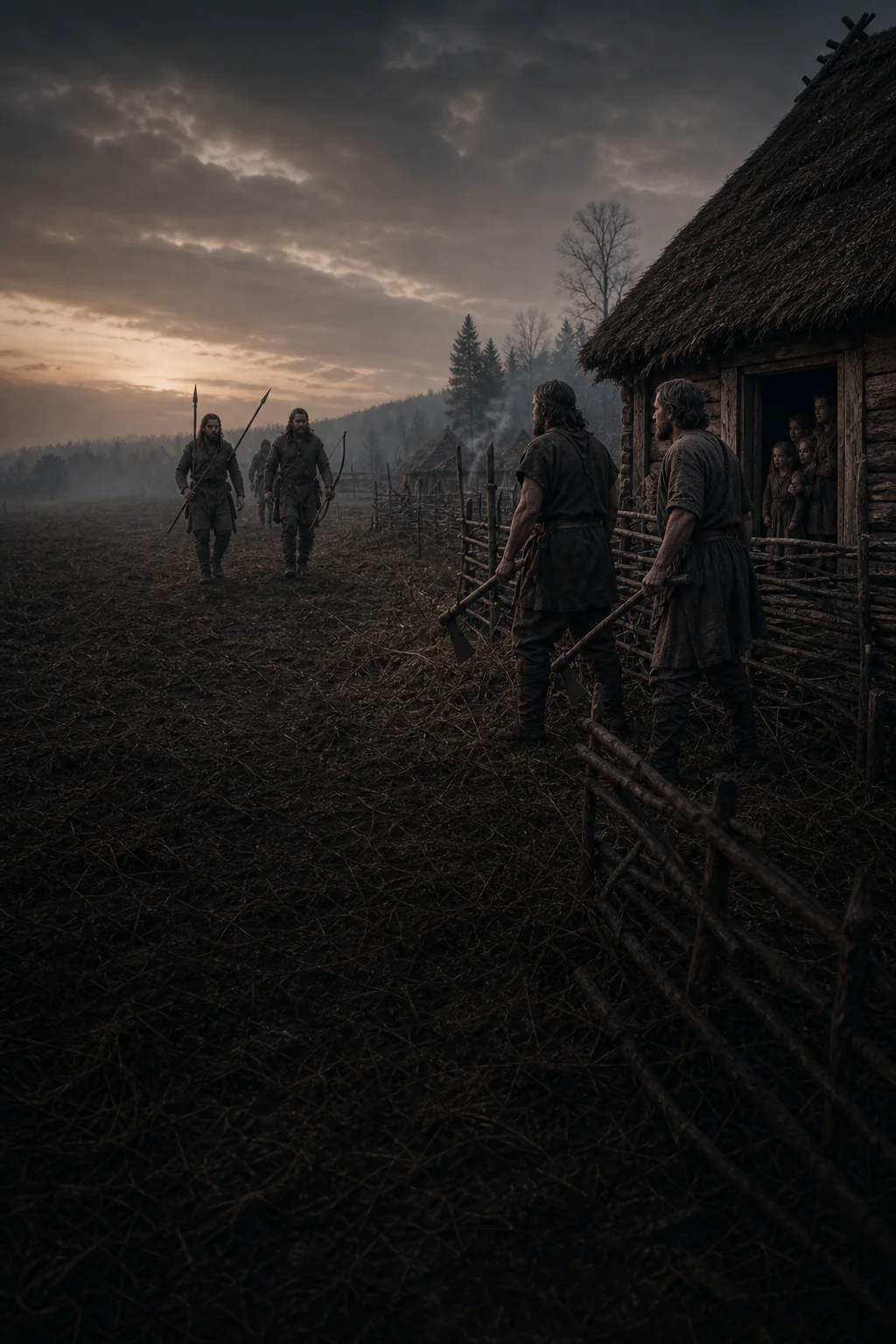
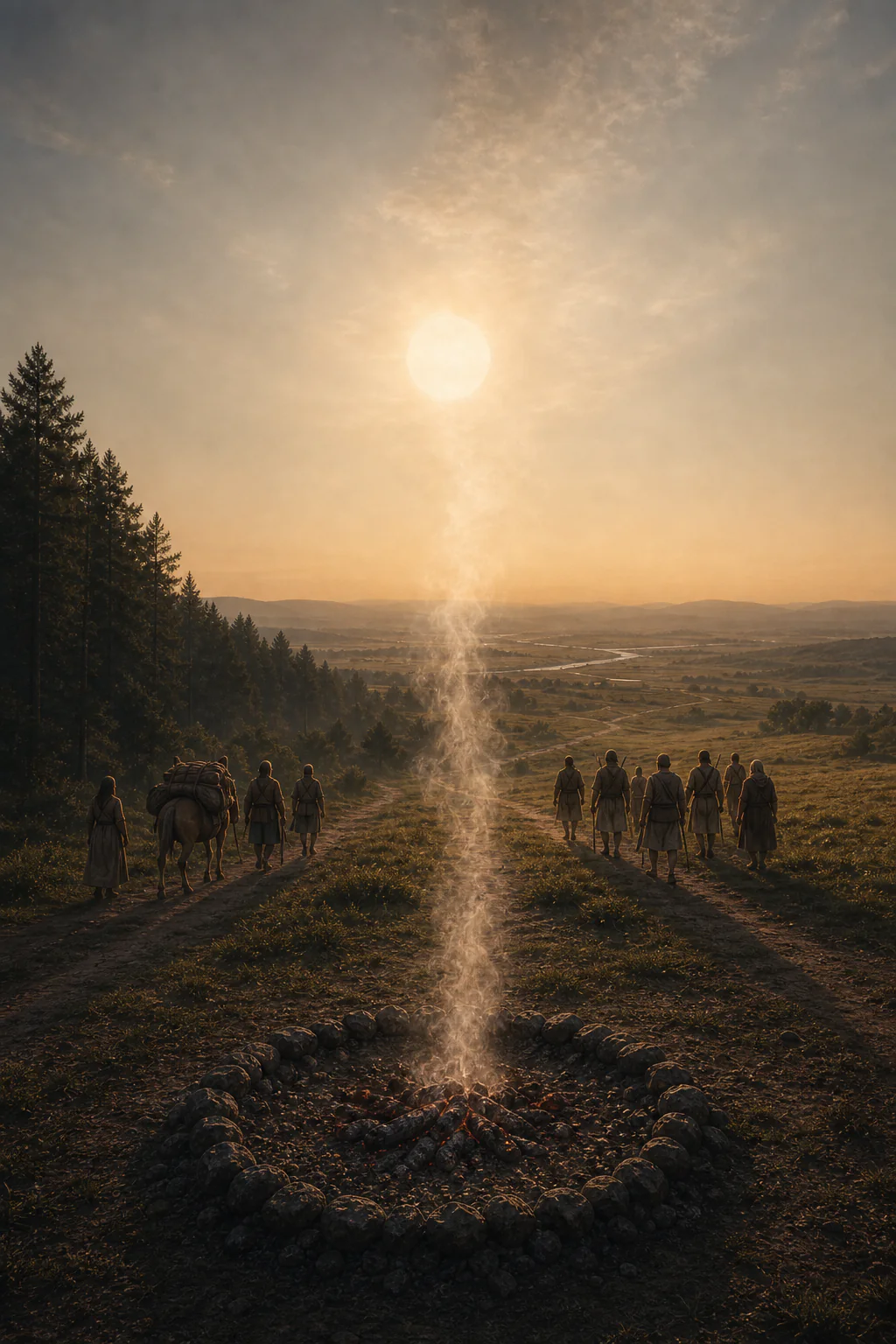
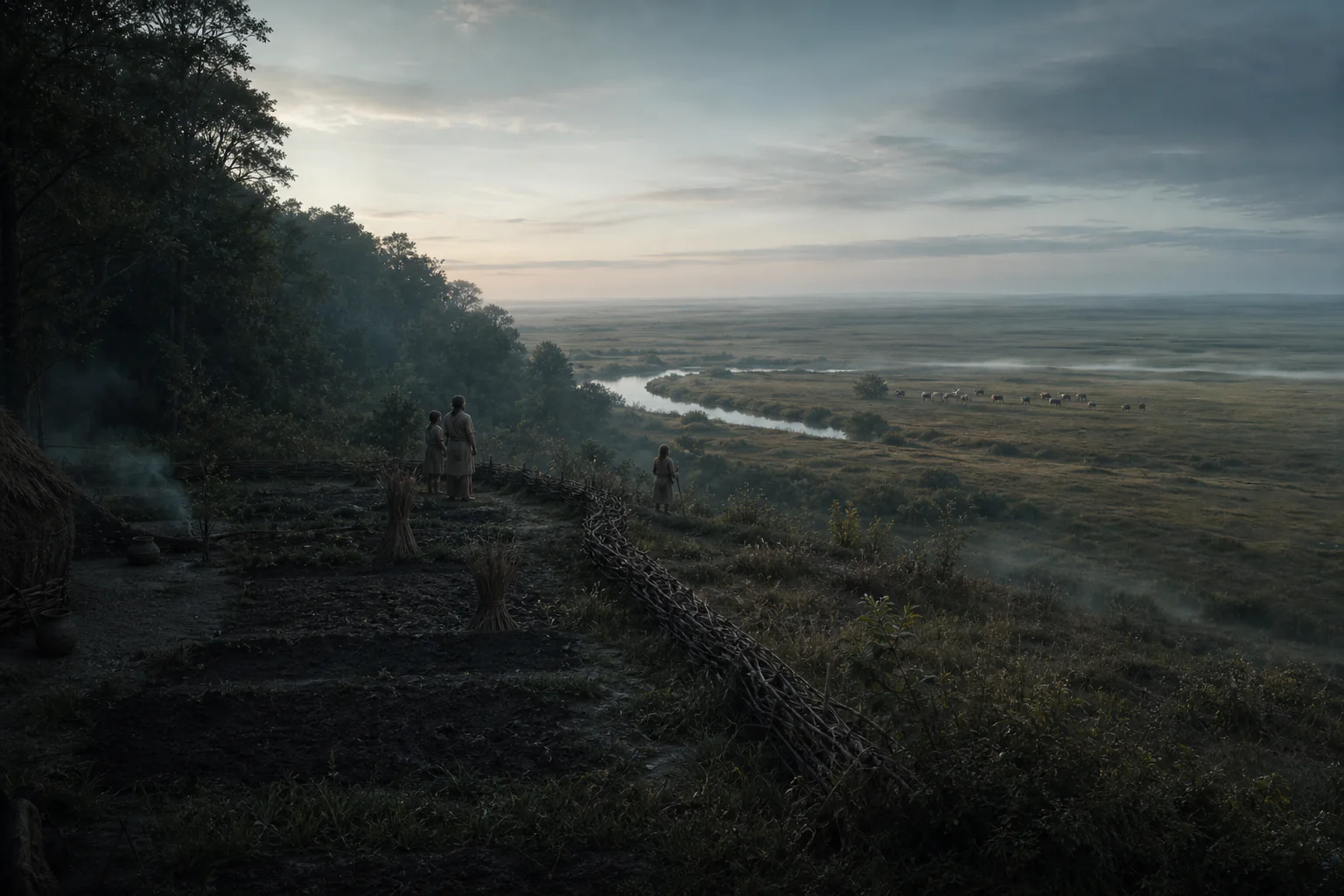
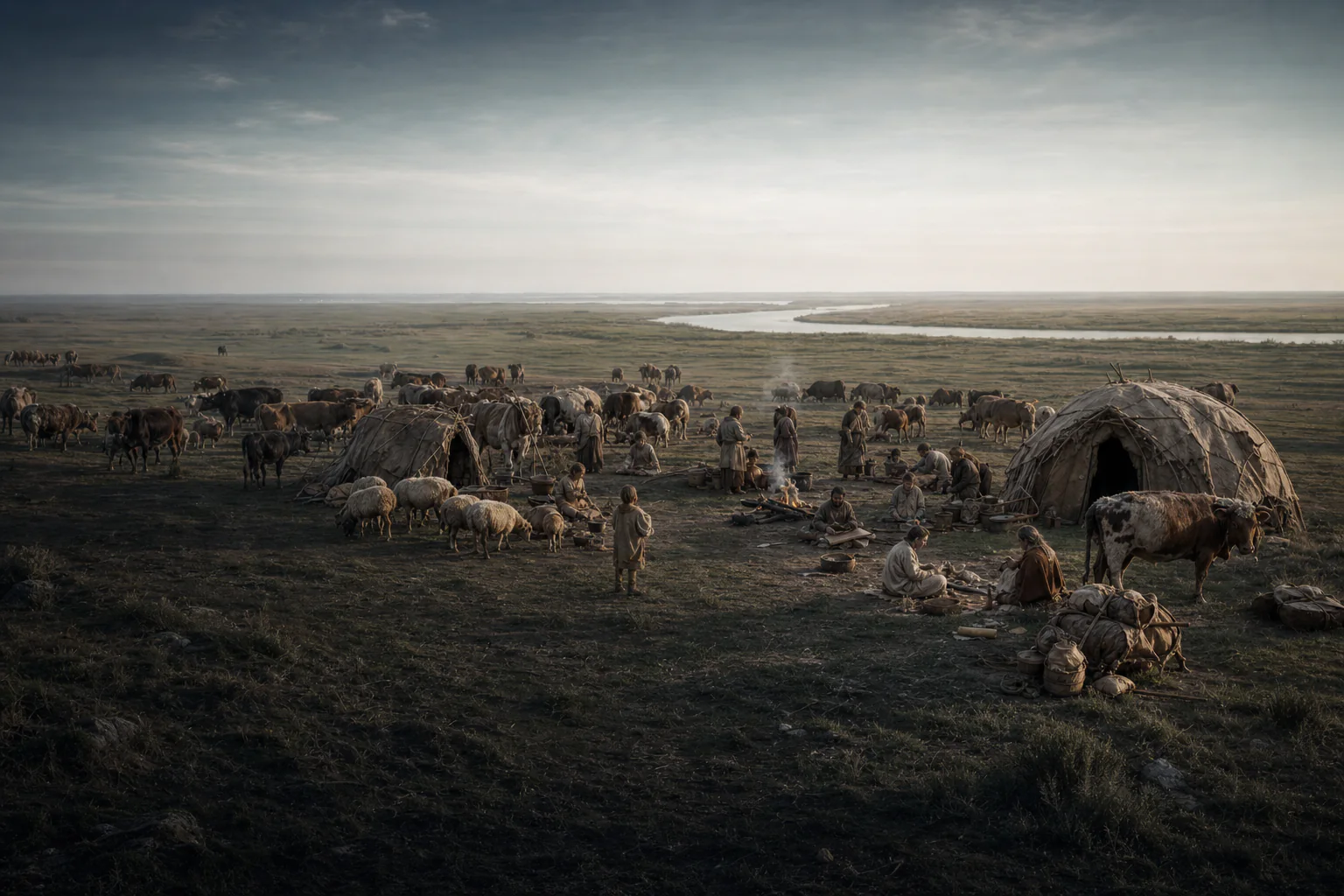
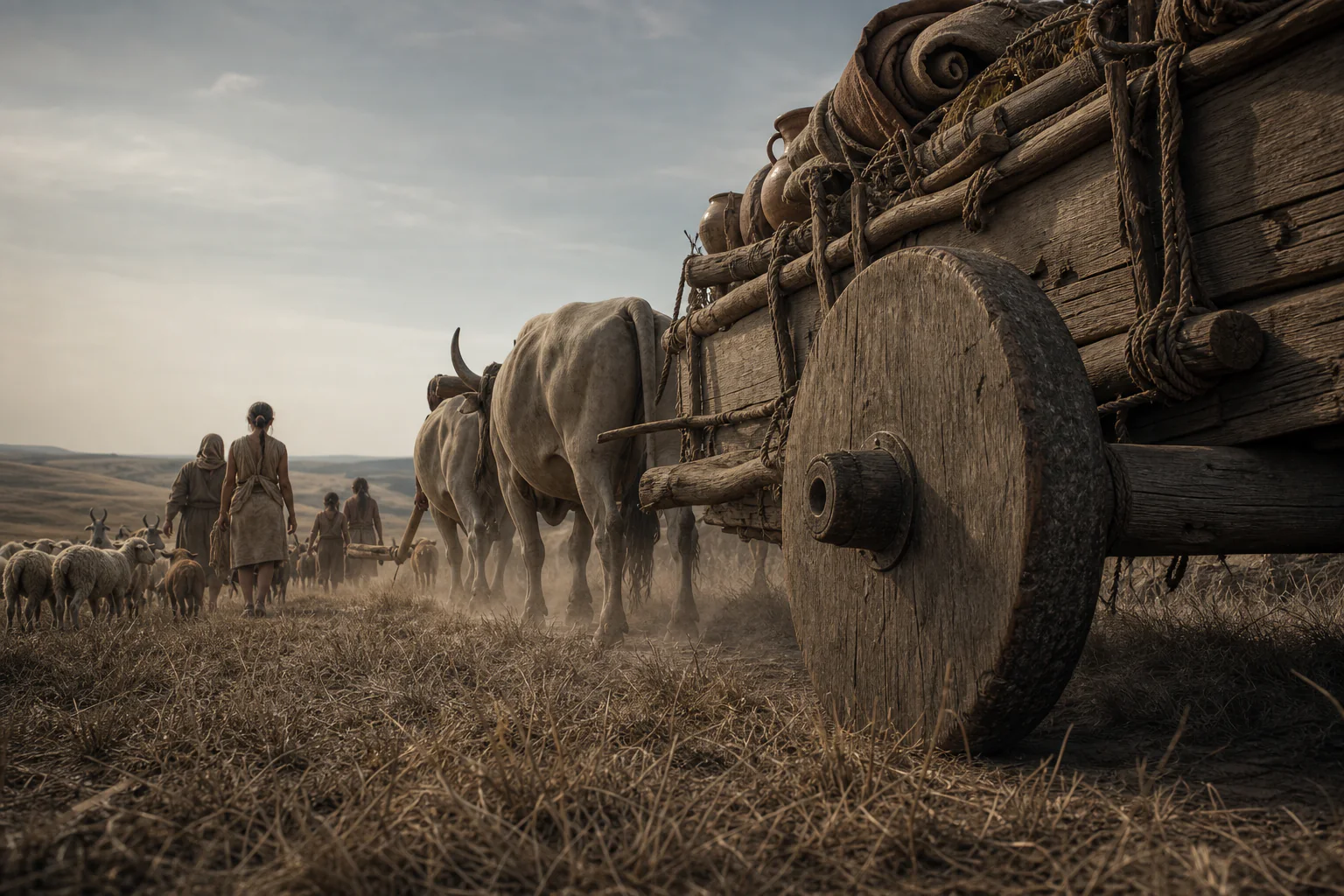
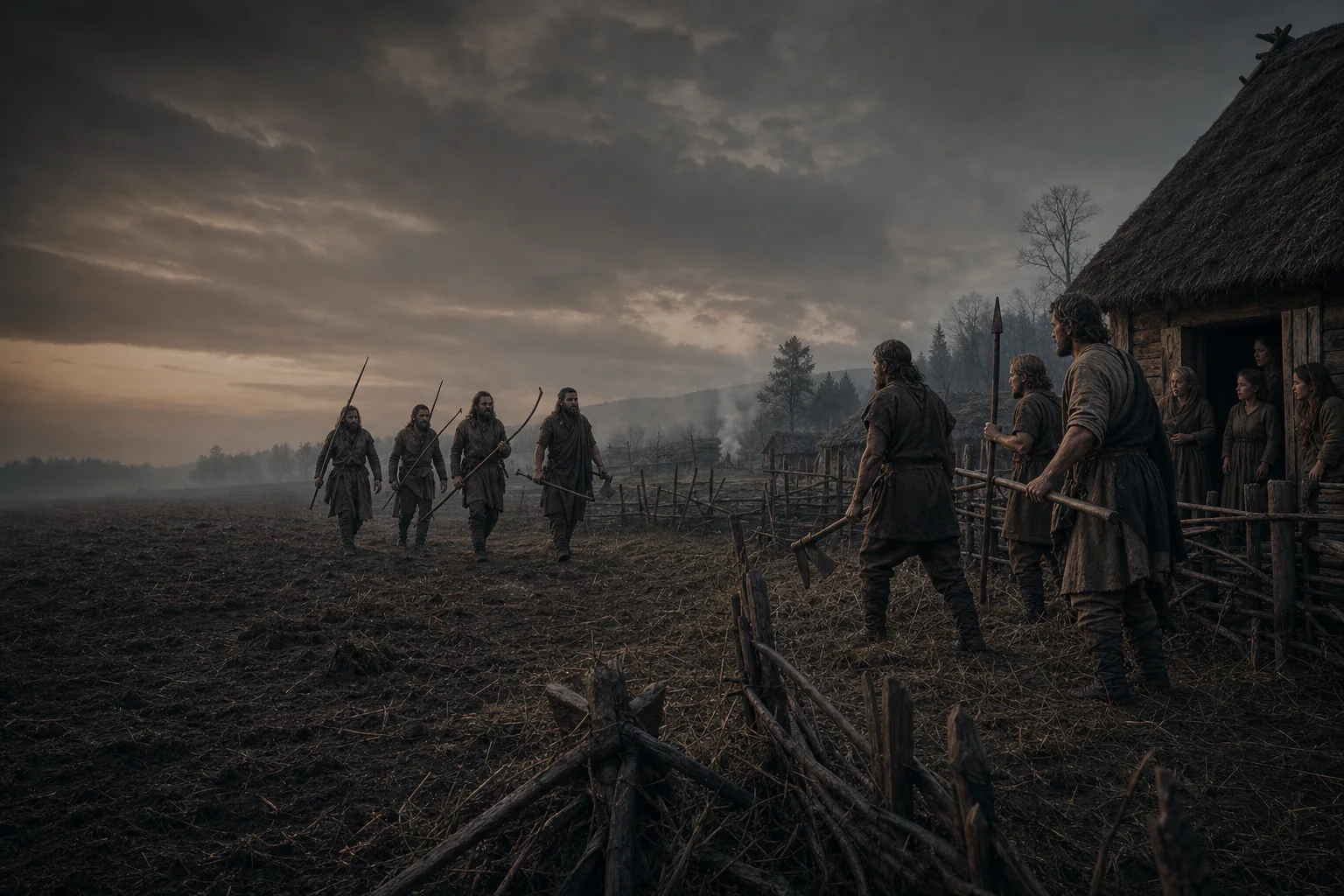
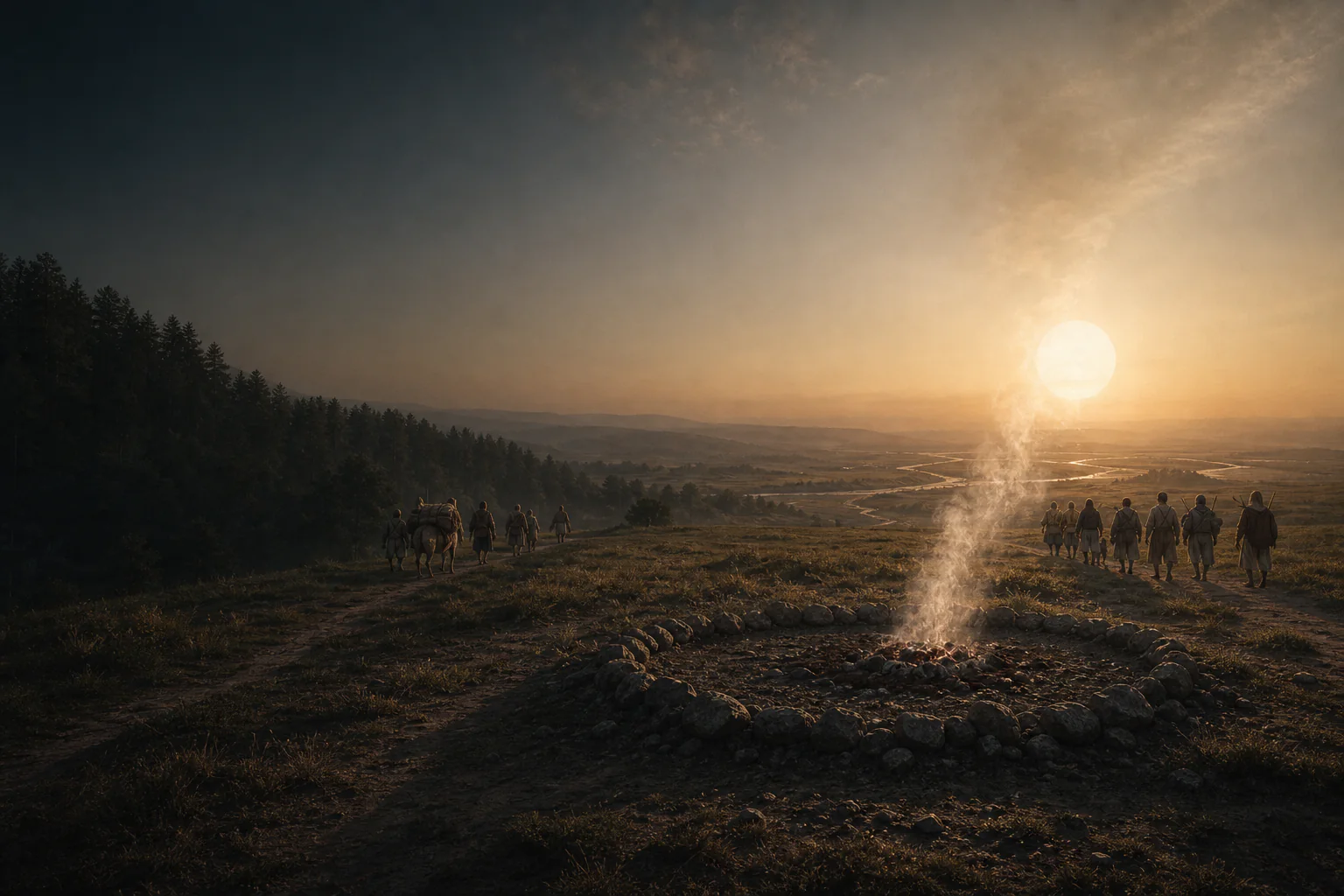
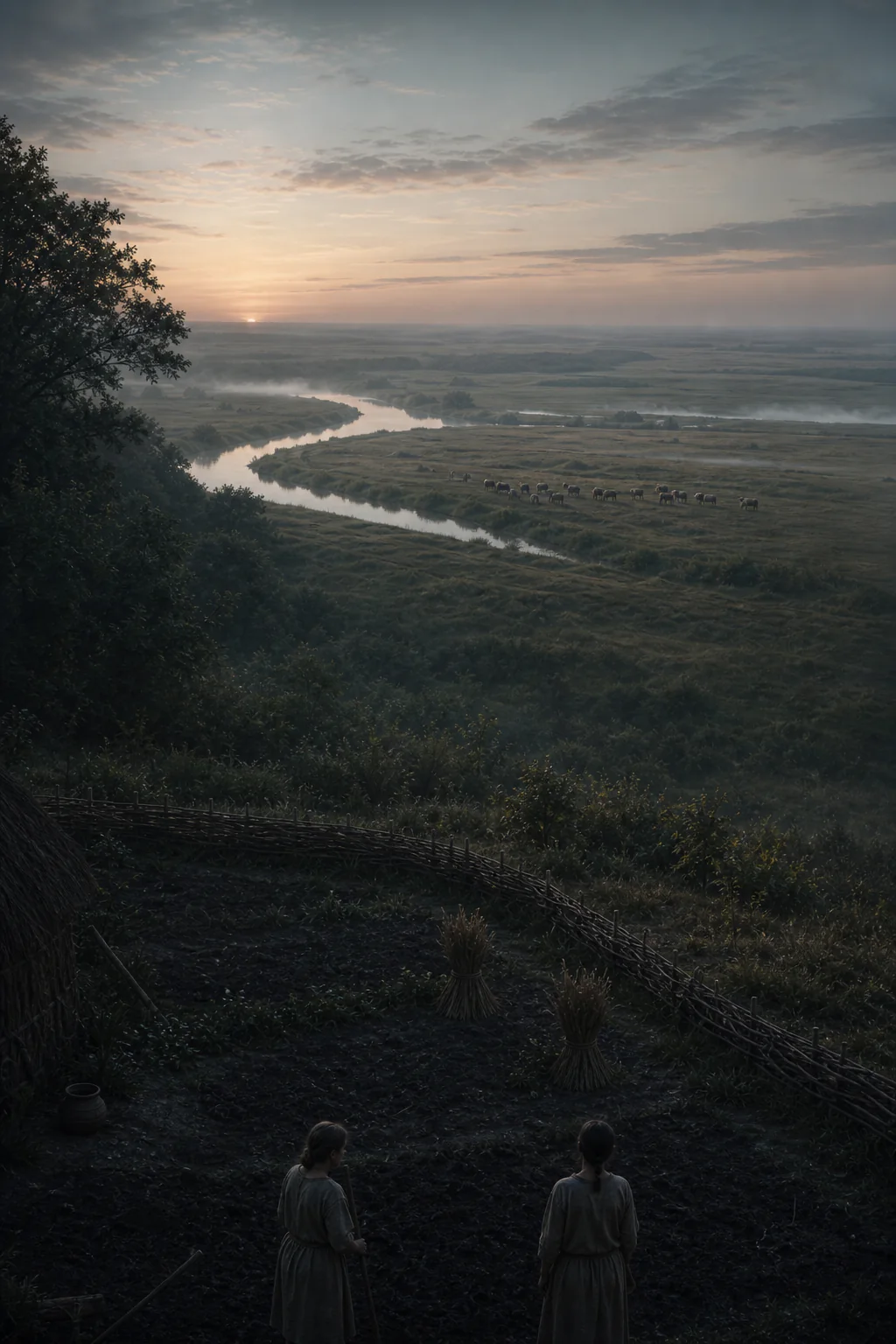
East of the farming plains, the woodland thinned and the sky widened. The lower Dnipro joined river valleys, grazing land and the open grasslands north of the Black Sea. Farmers lived along this frontier. So did communities whose cattle and sheep turned grass into food, hides and portable wealth. Exchange carried copper, pottery and animals across the boundary. Raiding and feuding could travel along the same routes.
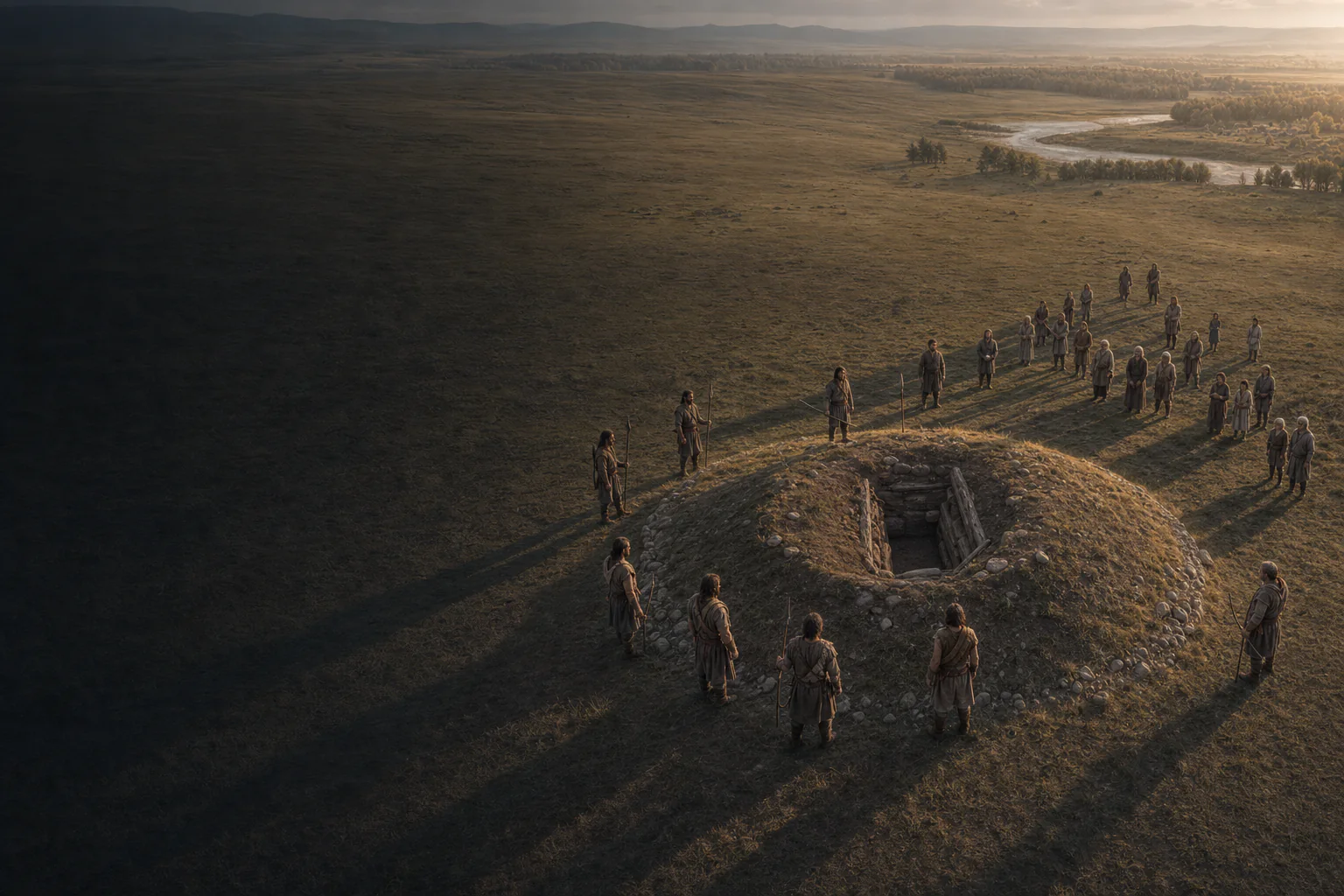
This was the edge of Europe’s settled world, not the edge of human society. Steppe households knew wells, river crossings and seasonal pasture. Their dead occupied marked places. Their living could assemble, divide and move without abandoning the animals that sustained them. That difference in movement would become a difference in reach, then in power.
What survived
- Settlement remains, animal bones and exchanged objects place farming and pastoral communities in sustained contact around the lower Dnipro.
- Ancient genomes reconstruct related steppe populations from sampled burials; they do not turn every frontier encounter into a single migration event.